By 2026, few hero shooters have maintained the pace of reinvention seen in Overwatch 2. Among the most celebrated additions to its rotating playlist is Flashpoint, a mode that dared to borrow from two of the most revered multiplayer franchises ever made. What began as a Season 6 experiment has matured into a fixture of competitive play, and its design language speaks directly to veterans of Battlefield and Call of Duty. Flashpoint does not merely combine mechanics—it merges the sprawling geography of Conquest with the structured push-and-pull of War, creating something that feels both nostalgic and startlingly fresh.
To understand why Flashpoint resonates, one must first revisit the DNA it carries. Battlefield’s Conquest is a titan of objective‑based gameplay. Teams deploy into enormous sandboxes dotted with a handful of neutral flags—often five—and the goal is to hold a majority of them until the enemy’s tickets bleed out. Captured flags become spawn points, transforming the battlefield into a fluid web of frontlines. This system rewards coordination, map knowledge, and rapid redeployment. It also means that losing a flag is not a death sentence; a cohesive squad can reclaim it by concentrating force on a single zone.
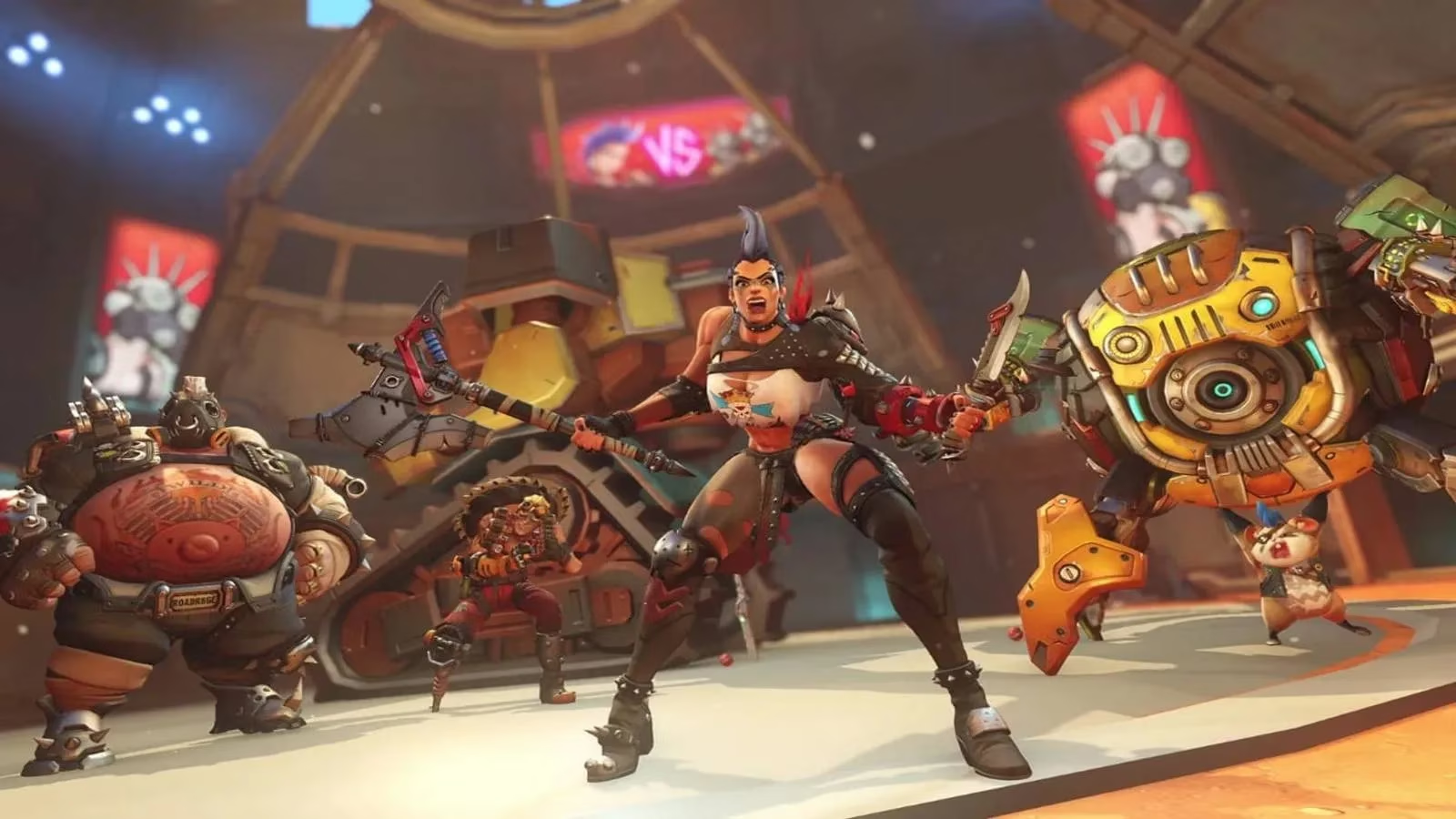
The scale of Conquest maps is essential to its identity. Rolling hills, urban sprawls, and industrial complexes give infantry and vehicles room to maneuver. The sheer size forces teams to split their attention and accept that no single player can control everything. That spatial liberty is something the Overwatch 2 team clearly admired, because Flashpoint was billed from the start as featuring the two largest maps in the game’s history. Locations like New Junk City and Suravasa are sprawling enough to host multiple distinct biomes within a single match, demanding pathing decisions that smaller arenas never asked for.
On the other side of Flashpoint’s lineage sits Call of Duty’s War mode—specifically its appearance in titles like World at War. War is neither a tug‑of‑war nor a static domination exercise. It begins with only a central point active, forcing both teams into an immediate clash for supremacy. Whichever side captures that point becomes the attacker and drives the enemy back toward the next sequential zone. Victory belongs to the team that can seize three consecutive points. The mode is linear, urgent, and relentlessly forward‑moving. There is no turning back to defend a lost flag; attention stays locked on the next objective.
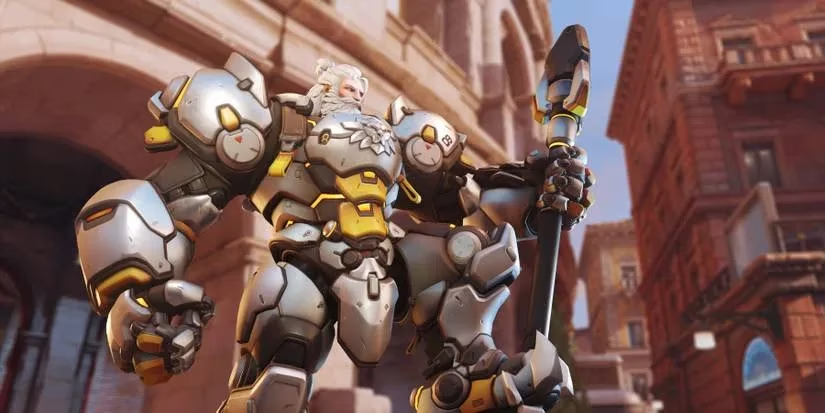
Flashpoint wraps these two philosophies around a 5v5 hero shooter skeleton. The match begins in a neutral state, usually with five total points arranged in a symmetrical line. The center flag—call it Point C—is the first to unlock. Both teams race to control it, and the contest plays out like a condensed War opening. Once that point falls, the victor pushes toward the next flag in the enemy’s half of the map; the losers fall back to defend. However, the twist that evokes Conquest is that all points, once captured, remain live as potential spawn zones. A side that secures Point C does not abandon it. Instead, it becomes a forward operating base where reinforcements can materialize, drastically reducing travel time.
As soon as a point is secured, the next one is immediately active. Blizzard deliberately eliminated the idle pauses seen in modes like Call of Duty’s Headquarters. The comment from the developers—that “the next one is already waiting”—remains a guiding principle in every Flashpoint match. Teams must plan ahead, assigning heroes to linger and fortify captured zones while the bulk of the squad pushes forward. This dynamic creates a layered rhythm: skirmishes erupt at the active point, roving flankers hunt for backline harassment, and a lone tank may hold a captured zone against a desperation counter‑push.
The influence of Conquest’s map design is not just cosmetic. Big maps give breathing room for heroes like Pharah, Echo, and Widowmaker, but they also punish poor positioning. A team that trickles back from a distant default spawn will likely lose two points before mounting a proper defense. This is why the spawn‑flag mechanic is so critical. After struggling with feedback about Push mode—where lengthy walks from spawn frustrated players—the Overwatch team implemented dynamic respawn points in Flashpoint. When a flag is fully under a team’s control, that flag becomes the default spawn for any player whose death timer expires. The system is not identical to Battlefield’s real‑time spawn selection, because Overwatch retains the hero‑selection screen, but the effect is the same: a smart capture heals the logistical wound of a huge map.
Below is a quick breakdown of how the three modes stack up in 2026:
| Feature | Battlefield Conquest | Call of Duty War | Overwatch 2 Flashpoint |
|---|---|---|---|
| Core objective | Hold majority of flags | Capture three sequential points | Capture three consecutive points faster than the opponent |
| Number of capture zones | Usually five neutral flags | Three linear points | Five points (center, two per side), fought in sequence |
| Spawn mechanics | Flags become spawn points | Static team spawns | Captured flags act as forward spawn points |
| Progression | Non‑linear, all flags active simultaneously | Strictly linear, one active point at a time | Linear but with simultaneous defense of captured zones |
| Player count per team | Up to 32 depending on title | 6–12 typical | 5 |
| Time to action | High due to map size, but spawn on flags mitigates it | Moderate, smaller maps | Moderate to high; reduced by flag‑based respawns |
The table clarifies why Flashpoint feels like a hybrid. The linear attack structure and three‑point victory condition are lifted wholesale from War, while the enormous terrain and flag‑based spawning are borrowed from Conquest. The result is a mode where momentum constantly shifts. A team might seize two points in a blistering offensive, only to lose the third because they spread too thin defending their gains. Comebacks are visceral, often hinging on a well‑timed ultimate that flips a contested zone.
Community response in 2026 reflects cautious approval that has matured into fondness. Early comparisons to Push were inevitable; Push also introduced a large map with a moving objective, but its single‑payload tug‑of‑war left many matches feeling repetitive. Flashpoint’s multiple active zones and the need to balance aggression with map control offer a deeper strategic palette. High‑ranked play frequently features role‑swap strategies where a support switches to a more durable hero to hold a flag, while a DPS takes over healing duties with Soldier: 76’s Biotic Field. Casual lobbies, meanwhile, relish the chaotic spectacle of simultaneous objective brawls.
Blizzard has continued to refine the mode. New maps added since Season 6, such as Gothenburg Foundry and Hikone Shrine, experiment with verticality and flanking routes, ensuring that no single team composition dominates. The spawn‑flag mechanic was tightened so that a captured zone only remains active as a spawn if at least one teammate is physically near it; this curbs situations where a stealth capture would permanently split the enemy team. These adjustments keep Flashpoint from becoming a simple footrace and instead reward the kind of deliberate planning the developers envisioned.
Overwatch 2’s embrace of both Battlefield and Call of Duty design philosophies is not an act of imitation but of intelligent curation. By combining the vast, flag‑riddled arenas of Conquest with the relentless sequential progress of War, Flashpoint offers a mode where geography and tempo matter as much as mechanical skill. In 2026, as the hero shooter landscape grows ever more crowded, that synthesis stands as one of the game’s most enduring achievements—a mode that honors its shooters‑of‑old roots while pushing the genre forward.
Comments