As I sit here in 2026, reflecting on the legal battles that have shaped the Overwatch League, one case from the past few years still stands out vividly in my memory—the $2.13 million lawsuit filed by the Hangzhou Spark against their former player, Cai "Krystal" Shilong. The announcement from Bilibi Esports, the Spark's parent company, sent shockwaves through the esports community, not just for the staggering sum involved, but for the story it told of a promising career derailed by conflict and alleged contractual breaches. This wasn't just a dispute over a missed practice; it was a saga of misaligned expectations, international complications, and a talent that seemed to slip through an organization's fingers like fine sand through a clenched fist.
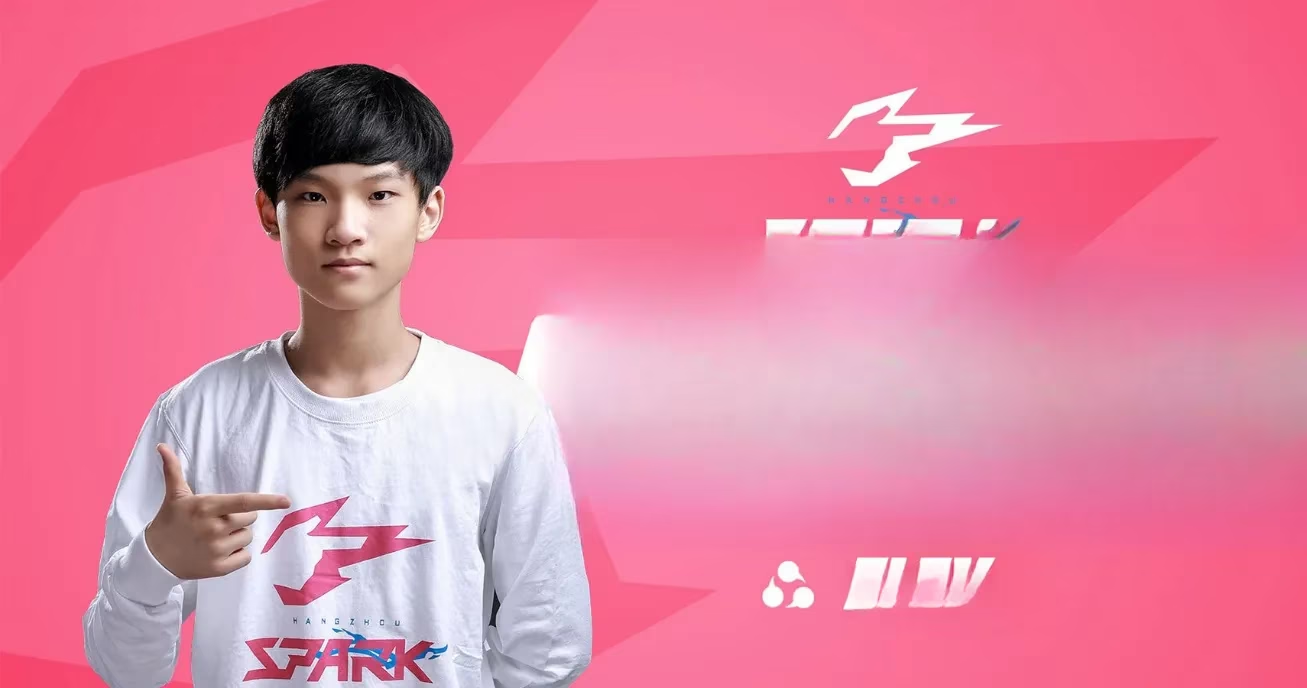
The Spark's grievances, detailed in their public statements and now formalized in court documents, paint a picture of a partnership that soured almost from the beginning. Krystal, a player whose mechanical skill was once as sharp and coveted as a master swordsmith's blade, requested special living arrangements separate from the team—a request the Spark honored but cautioned should not interfere with his professional duties. This initial accommodation, however, became the first domino in a chain of escalating issues. The organization claims Krystal began showing up late or taking unsanctioned leave, setting a precedent that would haunt their entire working relationship.
The situation reached a critical point during the team's preparations for the league's second season in the United States. Krystal obtained the wrong visa type, forcing an unplanned return to China. What followed was a period the Spark describes as one of frustrating delays. While Krystal cited illness as the reason for postponing his visa reapplication, the team's timeline shows these delays stretching from late 2018 into February 2019. He finally arrived in the U.S. on February 21st, having missed the entire preseason and the crucial opening matches of Stage 1. For a professional esports team operating on tight schedules and even tighter margins for error, this absence was more than an inconvenience; it was a strategic setback.
| Timeline of Key Events | Spark's Perspective | Impact on Team |
|---|---|---|
| Pre-Season 2 (Late 2018) | Krystal requests separate living | Team accommodates but warns about practice |
| Visa Process (Jan-Feb 2019) | Krystal gets wrong visa, delays reapplication in China | Misses preseason and Stage 1 start |
| Arrival in US (Feb 21, 2019) | Arrives late | Integration and synergy delayed |
| Pre-Stage 3 (2019) | Requests role swap 5 days before stage | Disrupts team composition and strategy |
| Mid-2019 Season | Misses practices, complains of unfair treatment | Creates internal tension and morale issues |
| June 2019 | Requests transfer, returns to China | Loss of a rostered player mid-season |
| August 2, 2019 | Indefinite suspension | Formal breakdown of relationship |
| Recent Past (Pre-2026) | Released, then signed by Guangzhou Charge | Spark initiates $2.13M lawsuit |
The narrative took another strange turn just before Stage 3. According to the Spark, Krystal requested a role swap—a significant strategic change—merely five days before competition began. The team, likely already frustrated, removed him from the starting lineup, which reportedly led to more friction. Krystal's engagement with the team deteriorated further; he began missing practices entirely or voicing grievances about perceived unfair treatment. The text exchanges released by management showed a pattern of last-minute cancellations and health-related absences that the organization found increasingly difficult to accept at face value.
By June, Krystal requested a transfer and returned to China, citing family reasons. The Spark, however, questioned this motivation, noting he purchased a ticket to Shanghai (where his family resided) instead of Beijing, where the team's Chinese operations might have been based. This detail, small yet telling, hinted at a deeper disconnect. The final straw came on August 2nd, when the team suspended him indefinitely. His release last month seemed to close the chapter, but the story had a final, dramatic twist: the Guangzhou Charge announced they had signed Krystal to a two-way player deal. This move, coming as the Spark were actively pursuing legal action, was like watching a high-stakes poker game where one player casually reveals a new card while the other calls in their lawyers.
Now, the lawsuit seeks 15 million RMB, or $2.13 million—a sum so colossal in the context of esports salaries that it feels less like a financial penalty and more like a statement. Overwatch League contracts, even for star players, rarely approach such figures. If the Spark prevail, the question of how Krystal could possibly repay this amount looms large. His talent is undeniable; his gameplay at his peak was a thing of beauty, a complex dance of pixels and prediction that left spectators in awe. Yet, his side of this story remains largely untold in the public record. The legal process will determine whether the Spark's claims hold weight or if there are mitigating circumstances we have not seen.
This case represents more than just a contract dispute; it's a microcosm of the growing pains in professional esports. It touches on themes of:
-
Player accountability in a high-pressure, international environment
-
Organizational management of talented but potentially difficult individuals
-
The legal framework governing esports contracts, which is still evolving in 2026
-
The clash between individual needs and team obligations
The irony is that as this legal drama unfolds, the Overwatch League itself continues. Both the Hangzhou Spark and the Guangzhou Charge are active competitors. The Charge, as the APAC defending champions, carry the weight of expectation, while the Spark look to rebuild and move past this controversy. Their upcoming matches in tournaments like the Countdown Cup are a reminder that the show must go on, even when backstage conflicts threaten to overshadow the performance.
Looking back from 2026, the Krystal lawsuit serves as a landmark case. It forced teams, players, and agents to scrutinize contracts with the intensity of a jeweler examining a diamond for flaws. It highlighted the need for clear communication, structured support systems for players living abroad, and robust conflict resolution mechanisms. For fans, it was a sobering reminder that behind the highlight reels and championship moments, esports is a business—a business where relationships can fracture, trust can evaporate like morning mist in a hot sun, and the consequences can be measured in millions. The final chapter of this story—whether it ends in a courtroom settlement, a dropped case, or a precedent-setting judgment—will undoubtedly influence how player-team relationships are negotiated and managed for years to come.
Comments