It still stings when I think back to that one competitive match three years ago. We were pushing the payload on King’s Row, seconds away from a hard-fought victory. The enemy team was almost wiped, and we just needed one last tick to seal it. But somehow, impossibly, the payload simply refused to move. The overtime bar flickered endlessly while my team rotated in confusion. No enemy was visible, no sound cue betrayed them—until post-match, red-faced, I watched the replay and there she was. A lone Mercy, perfectly horizontal inside the bush near the cart, using an emote to flatten herself into virtual oblivion. That moment changed how I look at Overwatch 2 forever.
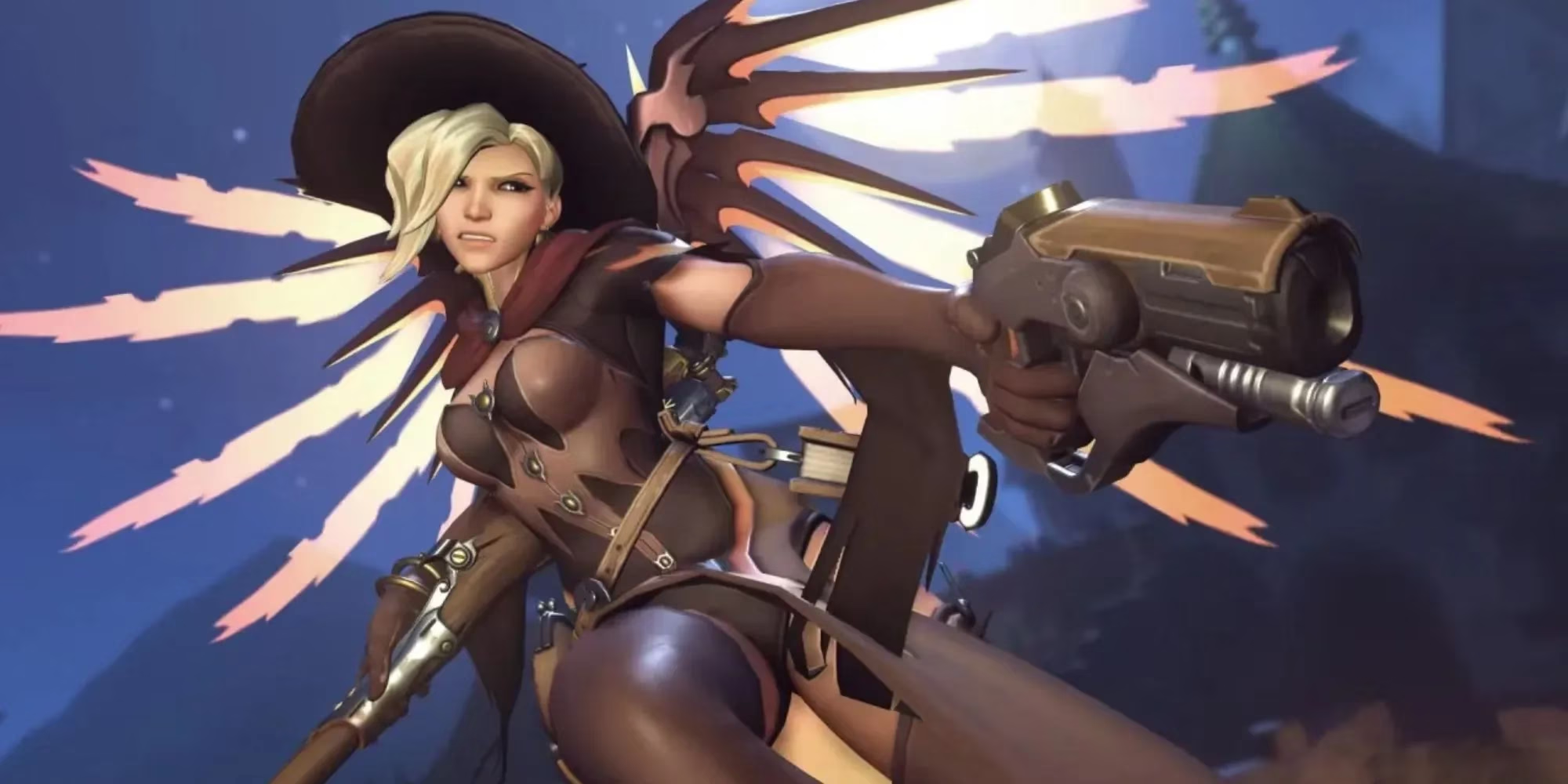
The player behind that hide-and-seek masterstroke was Reddit user SponsorTomix, who captured the incident on video and shared the now-infamous clip. “I just lost a competitive game because the enemy Mercy was contesting the payload from a bush,” they wrote. The post exploded overnight, and suddenly dozens of others chimed in with identical experiences. It turned into a collective groan of disbelief across the Overwatch community. How could something so simple be so effective? And, more worrying, how did a pink-winged angel lying in a shrub become the most unfair tactic in the game?
The technique hinged on a peculiar interplay between emotes, foliage, and graphical settings. Mercy’s specific “lying down” emote, coupled with certain bushes placed dangerously close to payload routes, made her literally invisible if your detail level was set to high. The bush rendered as a thick, opaque clump of greenery that swallowed her whole. Meanwhile, if someone played with settings turned to low—or on less powerful hardware like the Nintendo Switch—those bushes became sparse, almost transparent, making the Mercy stick out like a sore thumb. This created a bizarre hardware-dependent advantage. I remember scrim partners arguing furiously: those with ultra-high-end rigs could exploit the tactic freely, while players on budget systems were essentially punished for not investing in a better graphics card.
One Redditor, Public-Sink6672, described the reverse scenario perfectly. “I have everything set to low and was so confused why there was a Mercy just AFK-ing there one game. Killed her and she immediately hit me with the ‘?????????’ I thought I f***ed up and broke some moral code between supports.” That message captures the strange ethical gray zone this tactic occupied. Was it a clever use of game mechanics, or an outright exploit? In 2026, the debate has simmered down only because Blizzard eventually adjusted foliage consistency across all quality presets, but back then the forum wars were relentless.
I started seeing this strategy crop up in ranked matches on at least half a dozen maps. Players compiled lists—Busan’s meka base garden, the shrubbery along Adlersbrunn on Eichenwalde, even a lone bush near the final corner of Junkertown. Clever Mercys would sneak there, contest the payload when their team was regrouping, and force the enemy into a panicked sweep of the area. If you didn’t know where to look, you’d burn precious seconds swinging wildly at nothing, all while the Mercy’s health regeneration ticked back any chip damage. It felt like a horror movie: an unseen presence stalling the objective, and your team’s morale crumbling with every delayed tick.
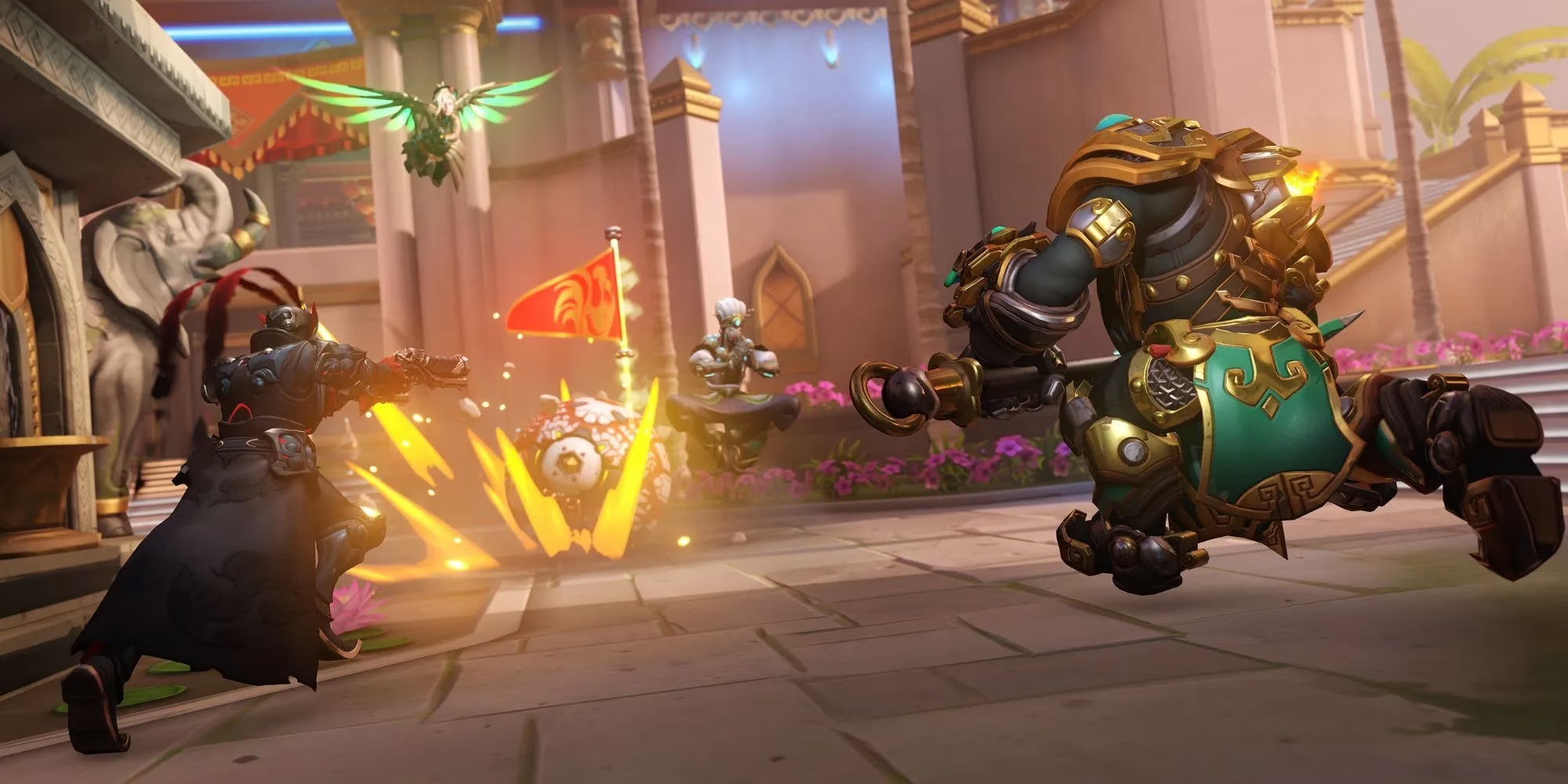
The psychological impact was worse than the mechanical one. I vividly recall coaching sessions where I had to drill into my team’s heads: “Spray the bushes. Just spray them. If overtime is burning and you don’t see anyone, shoot the nearest shrub.” That’s not a strategy, that’s a bug-driven ritual. But it underscored a deeper problem with Overwatch 2’s design—emotes that alter hitboxes and obscure heroes were never intended to be competitive tools. The lying-down emote was purely cosmetic, yet here it was, deciding matches in Grandmaster.
As a professional player, I watched the community fracture over the bush meta. Some argued it was no different from using a corner or a clever piece of geometry—just another map-aware tactic. Others called it a straight-up exploit, demanding bans or at least emote restrictions in ranked. Tournament organizers eventually had to step in and explicitly ban the lying-down emote during official matches, though pubs remained a lawless jungle. It was a strange era where your mercy player needed to practice not just Guardian Angel slingshots but also the optimal angle to disappear into a shrub.
By 2026, the bush controversy feels almost like a relic. The developers have normalized foliage density across settings, and most of the infamous hiding spots have been pruned or relocated. Yet the memory lingers. It serves as a cautionary tale about unintended interactions between art, emote systems, and competitive integrity. Whenever someone accuses me of being paranoid about checking corners, I just smile and recount the distant Tuesday night when a Mercy in a bush taught me that in Overwatch 2, victory often hides where you least expect it—literally.
Perhaps the strangest legacy of all is how it bonded the community. The shared confusion, the ludicrous “????????” replies, and the endless tip-sharing threads turned a bug into a cultural moment. So if you’re queuing up today and you see a lone bush near the payload, spare a thought for those of us who learned the hard way. It’s always worth a few bullets—just in case there’s an angel lying inside.
Comments