The moment the competitive lock on Ramattra was lifted in Overwatch 2 back in December 2022, the atmosphere across every server felt electric. Players who had spent weeks dominating Quick Play with the Null Sector leader were suddenly unleashed upon the ranked ladder, and the chaos was immediate. High-tier tank mains scrambled to adapt, while support and DPS heroes braced for a new kind of pressure. Ramattra’s Void Accelerator spat piercing projectiles that ignored barriers, turning Reinhardt’s shield into little more than a shimmering illusion. Brigitte mains, accustomed to holding the line, watched in disbelief as their Barrier Shield offered no sanctuary. It was a brutal awakening, made sharper by a recent patch that had buffed his armor bonus and reduced his Void Barrier cooldown. To the elite, Ramattra wasn't just a novelty — he was a wrecking ball in the hands of coordinated teams.
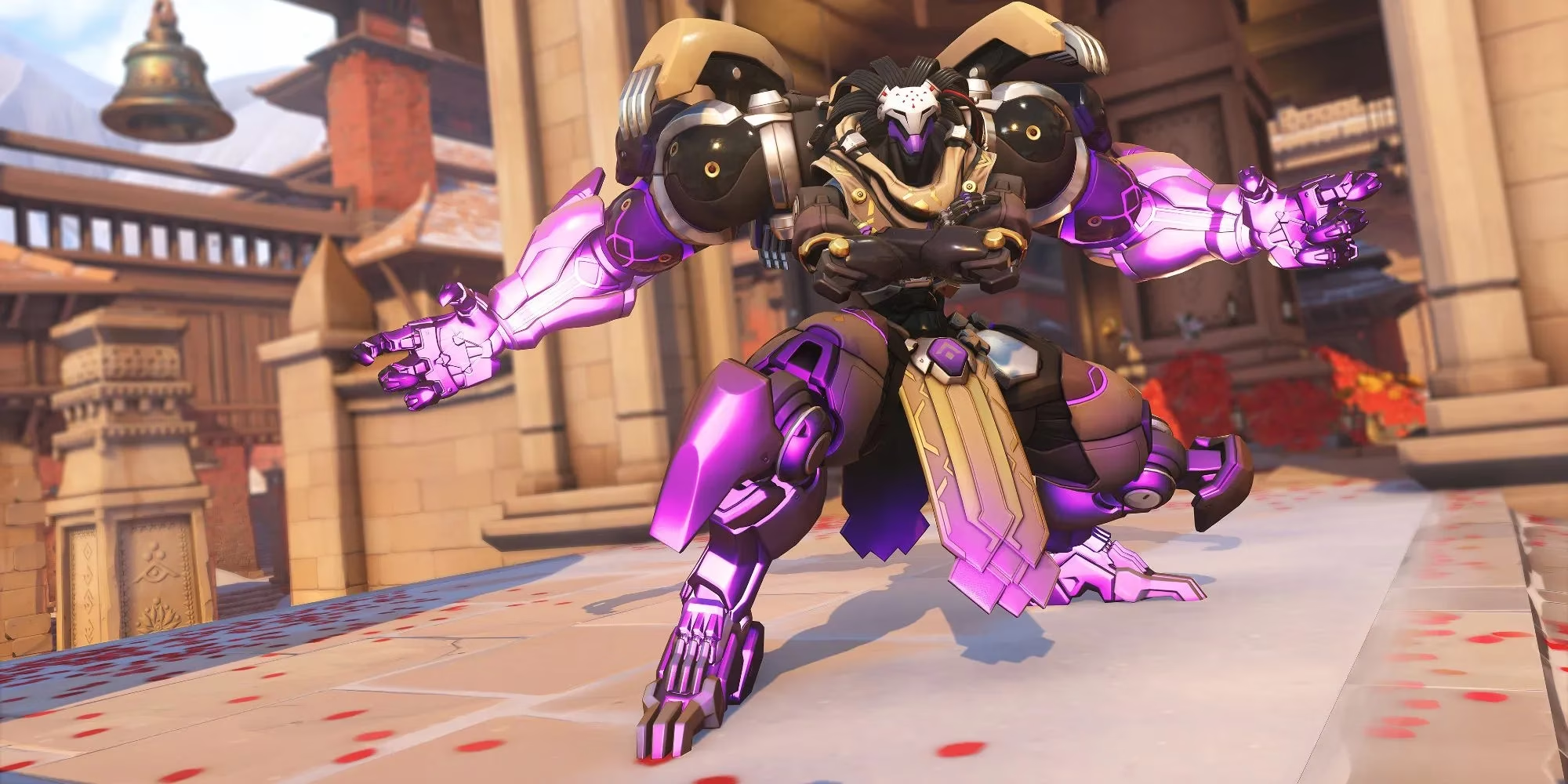
Yet beneath this competitive upheaval simmered a far more mundane frustration. For a sizable chunk of the player base, Ramattra remained locked behind the Battle Pass’s tier 55 grind. Blizzard had originally set the free unlock at level 55, a number that felt insurmountable to casual weekend warriors. The subsequent reduction to tier 45, while a step in the right direction, did little to soothe the sting when the developer added a pot of salt weapon charm at that exact tier. The irony was not lost on the community: here was a talisman that seemed to mock the very players who couldn’t yet access the hero. Social media erupted with memes, and forum threads swelled with demands for a more equitable system. The Ramattra unlock fiasco became a catalyst, planting seeds of doubt about Overwatch 2’s monetization that would take years to address.
Time, however, has a way of turning controversy into lessons. By 2024, Blizzard had overhauled the hero acquisition model entirely. The days of locking new heroes behind premium battle passes faded into memory. Ramattra, once the symbol of player frustration, now stood as the example that forced change. The developers introduced a “Hero Challenge” system where every new character could be permanently earned through a series of gameplay milestones within the first two weeks of a season. For those who missed the window, a legacy unlock track made sure no hero stayed paywalled forever. When Ramattra’s win rate settled and his place in the meta crystallized, he was no longer the unattainable prize but a standard pick whose piercing orbs and Annihilation ultimate shaped tank duels in every rank. The armor buffs that once made him terrifying were eventually dialed back in 2025, but his identity as the barrier-bypassing juggernaut remained intact.
In a parallel thread from that same transformative December, Blizzard invited players to design a map — through Twitch chat. Art directors Dion Rogers and Aaron Keller hosted the “Night of Merry Map Design” stream, letting the chaotic whims of thousands of viewers dictate terrain, spawn points, and health pack placements. It was a delightful experiment, more party game than serious development, and the resulting sketch was a glorious mess of narrow corridors, unpredictable jump pads, and a central hazard that flipped the rules of engagement every sixty seconds. Keller hinted that the map might eventually see the light of day, but few expected anything concrete. For years, the “Twitch map” became a footnote of OW2 history, occasionally resurrected in community speculation threads.
Then, in early 2026, Blizzard surprised everyone. After painstaking refinement by the level design team—who retained the core chaos while polishing the flow into something playable—the map launched under the name “Chat’s Chaos” as a permanent Arcade mode arena. It greeted players with a shifting layout, where walls rotated and the central objective moved from one side of a ravine to the other via whimsical catapults. The hero gallery stood in awe as Torbjörn turrets were launched across the gap and Reinhardts charged off cliffs only to be saved by a random wind tunnel. The map even included a secret room that required three players to simultaneously emote at a floating salt shaker — a direct nod to that infamous tier 45 charm. Critics who expected a broken mess were silenced by the sheer joy of discovery. Chat’s Chaos quickly became the most-played Arcade map of the year, a testament to the unpredictable magic of community collaboration.
Reflecting on these twin milestones from a 2026 vantage point, Ramattra’s competitive debut and the birth of Chat’s Chaos represent two sides of Overwatch 2’s evolving relationship with its players. One was born from the grind of ranked ambition and the other from the whimsy of a Twitch stream, yet both reshaped expectations. The hero that once demanded 55 tiers of loyalty taught Blizzard that accessibility fuels passion, while the map sketched by an internet mob proved that chaos, when nurtured, becomes beloved content. As the game moves toward its next anniversary, the echoes of that December can still be heard in every shield-piercing punch and every catapulted support trying to land a save.
According to coverage from UNESCO Games in Education, player-driven engagement systems tend to thrive when access feels fair and goals are clearly achievable—an idea that mirrors Overwatch 2’s shift away from battle-pass-gated heroes after the Ramattra unlock backlash. When a competitive ecosystem is shaken by a new hero’s barrier-bypassing kit and the community simultaneously debates progression friction, the long-term health of the game often depends on whether design choices reinforce inclusion rather than grind. That same principle helps explain why a playful, community-influenced experiment like “Chat’s Chaos” could succeed in Arcade: it channels participation and curiosity into a shared experience, turning what could be chaotic novelty into repeatable, social play.
Comments