The winds of change howl through the rusted canyons of the Australian outback, carrying with them the echoes of gunfire and the promise of renewal. In the sprawling, ever-evolving world of Overwatch 2, Season 9 arrived not with a whisper, but with a seismic roar, overhauling the very foundations of combat. While the community's collective gaze was fixed upon the universal health increases and the new Champion tier gleaming atop the competitive ladder, a quieter, more profound transformation was taking place under a blanket of stars. Junkertown, the iconic escrow map born in 2017, received a masterful rework—a poetic revitalization that, frankly, deserves way more hype than it's getting. It’s the ultimate glow-up, proving that sometimes, the most impactful stories are told not in the blinding noon sun, but in the deep, contemplative hues of midnight.
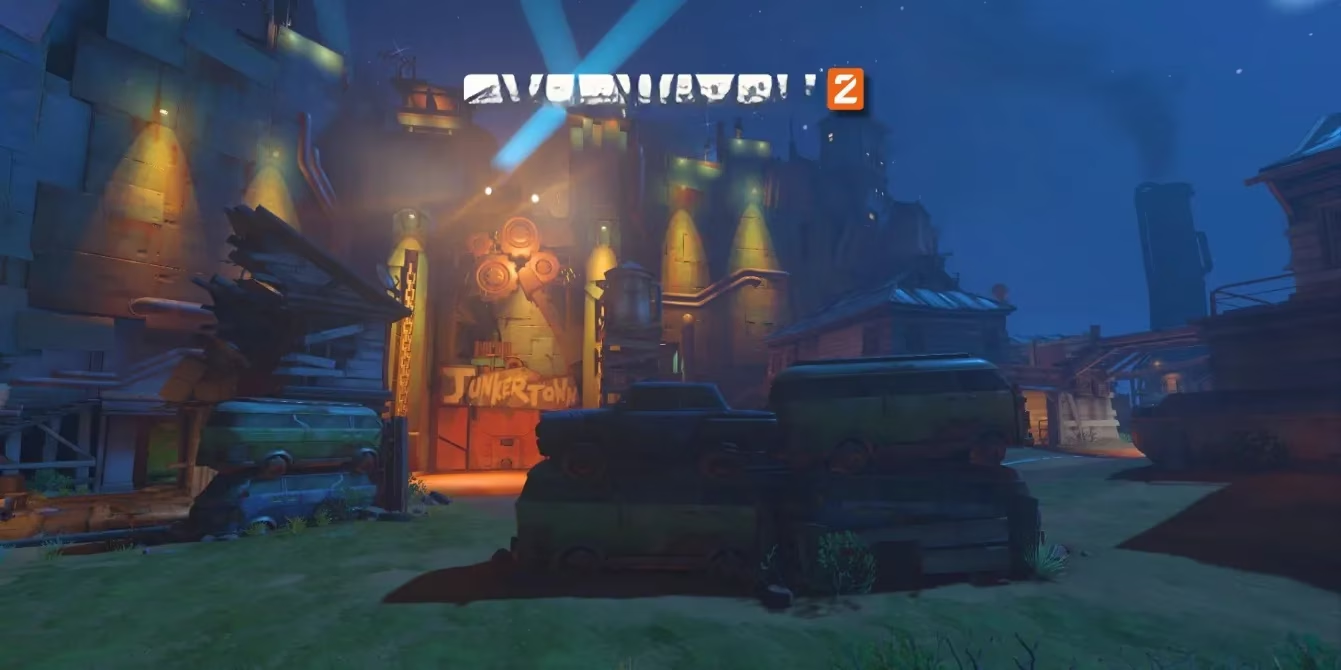
A Canvas Reforged in Starlight and Steel
Junkertown has always been more than a battleground; it's a character in its own right, a love letter to post-apocalyptic Australiana and the stomping grounds of legends like Junkrat, Roadhog, and the mighty Junker Queen. Its lore is etched into every corroded wall and scattered scrap heap, whispering tales of a kingdom and hinting at future arrivals like the fabled Junker King. The Season 9 rework honors this legacy while painting it anew. The introduction of a breathtaking nighttime variant is nothing short of a revelation. While maps like Circuit Royale have seen time-of-day tweaks, this is Junkertown's first dance with the dusk, and oh boy, does it slay. The familiar rust and dust are bathed in the cool light of the moon and the warm, sporadic glow of neon, transforming the wasteland into a scene of haunting beauty. It's a masterstroke from Team 4, a clear signal that they're listening—not just to balance sheets, but to the soul of their game.
Engineering Fair Play: The Art of the Cover-Up
Beyond the aesthetic poetry lies a narrative of thoughtful, practical game design. For years, Junkertown's first point was a notorious pain point, a defender's paradise where a skilled Widowmaker or a hovering Pharah could shut down an attacking team's advance before it even began. It was, as they say, a real 'feels bad man' moment. Blizzard's developer blog from February 12th directly addressed this, stating the intent was to give the offensive team a fighting chance. The solution? Strategic, life-giving cover.
The changes are both subtle and significant:
| Old Junkertown (First Point) | New Junkertown (First Point) |
|---|---|
| Open, exposed cliffside path | Narrower path with strategic cover objects 🛡️ |
| Long, unforgiving sightlines | Broken up by a new water tower and small shack |
| Few options for payload advance | Multiple new angles and barriers using wrecked cars |
These aren't just props; they are instruments of balance. The shrunken cliffside path forces more intimate engagements, while the newly placed cars, water tower, and shack provide crucial reprieve. It’s a lesson in game design: sometimes, the best way to empower players is to give them something to hide behind. This philosophy of addressing historical "pain points" shows a maturity in Overwatch 2's approach—a willingness to look back and mend what was broken, even for a map that is the 23rd of the current 36. It’s a commitment to the long game.
A Blueprint for Tomorrow's Battlegrounds
Junkertown's successful revival is a beacon, illuminating a path forward for the entire map roster. Its success story whispers a tantalizing question: who's next? The map's modifications, particularly the surgical addition of cover, have demonstrably upped the quality of matches, making them less about enduring a brutal chokehold and more about dynamic, tactical play. This aligns perfectly with Blizzard's stated goal, seen previously in the Season 5 update to Watchpoint Gibraltar. For other maps plagued by similar issues—the long, punishing sightlines of Circuit Royale or the infamous first-point defenses of Dorado—Junkertown stands as a proven model.
The potential dividends for future patches are huge. Imagine:
-
Dorado's first archway receiving similar cover elements to break defender dominance.
-
Havana's long streets getting more interactive geometry for flanking routes.
-
Rialto's initial bridge encounter being rebalanced with new vertical options.
Of course, change is never universally celebrated. Some purists may balk at alterations to maps they've known for years, arguing it changes the "essence" of a fight. But evolution is the name of the game—literally. These updates are a testament to Blizzard's refusal to let their game stagnate. They're putting in the work, grinding away at the rough edges to polish the player experience.
The Midnight Standard
As we look ahead from 2026, Junkertown's rework is more than a seasonal update; it's a statement of intent. It proves that reverence for the past and innovation for the future are not mutually exclusive. You can have your cake and eat it too—a visually stunning, lore-rich nighttime spectacle that also plays like a dream. This map's journey from a sun-blasted gauntlet to a starlit arena of tactical possibility sets a new gold standard, or perhaps, a midnight standard. It's a love letter to the community, a response crafted in steel and shadow, promising that every corner of Overwatch 2's world is worthy of care. The success here isn't just about fixing a map; it's about charting a course. One can only hope, with fingers crossed, that Team 4 continues to take this feedback loop and run with it, revealing the next chapters in this ongoing saga of refinement. The future of Overwatch 2's battlegrounds looks brighter—and more beautifully dark—than ever.
Comments