When Kiriko finally strolled into Overwatch 2's competitive queue, support mains everywhere felt a dangerous new emotion: the urge to flank. Her hybrid damage-healing kit arrived after a two-week soft launch designed to let players learn her kunai trajectory, her swift step escapes, and the delicate art of teleporting directly into a Reinhardt charge. That practice window, however, came with a catch. Unless someone bought the premium battle pass, unlocking Kiriko meant climbing to tier 55, a grind that reportedly stretched past 50 hours. That is roughly 3.5 hours a day since launch, or as support players call it, "a normal Tuesday."
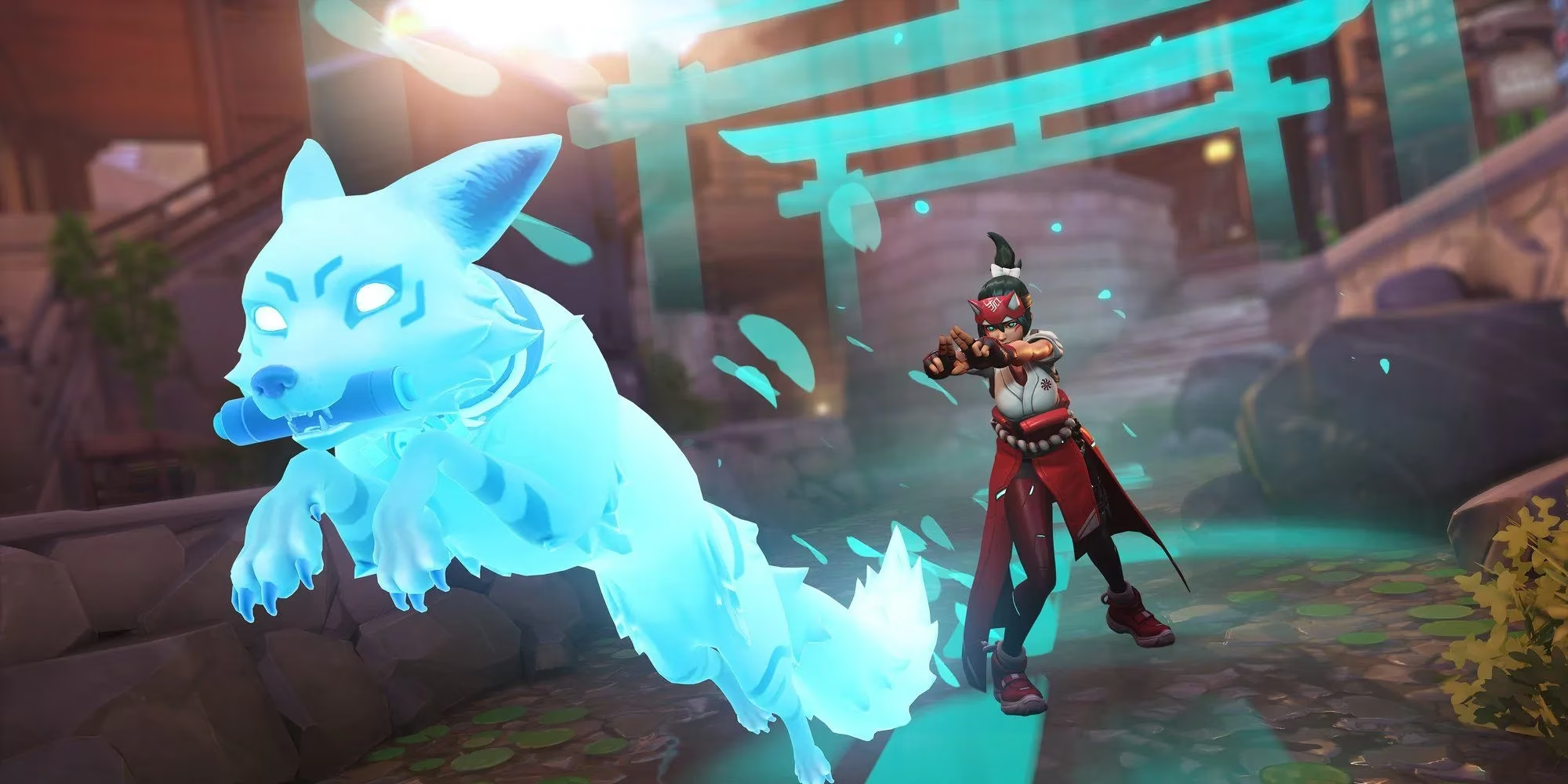
Once unlocked, she could finally enter competitive and start cleaning up the mess left by tanks who believed payloads were optional. Her kit encouraged a style that was equal parts doctor and assassin, healing allies with ofuda and then vanishing through walls like a fox spirit who forgot to pay rent. For players still stuck in quick play without her, the battle pass became a second job with very little overtime compensation.
Then came the Halloween plans. A witch skin for Kiriko was scheduled for the following Tuesday, just in time for spooky season. She joined the limited-time Junkenstein's Revenge: Wrath of the Bride mode, a four-hero PvE romp where she and Mercy could both lean into their witchy side. Competitive lobbies were about to become a runway of broomstick-adjacent cosmetics, and the only thing scarier than a teleporting healer was a teleporting healer wearing a hat.
The hero roster around her, however, was not exactly celebrating. Bastion and Torbjörn remained unavailable, leaving a turret-shaped hole in many defensive lineups. Bastion players had to cope without their beloved beeping murder machine, while Torbjörn mains wandered around with nothing to hammer except their own sadness. The community, meanwhile, turned its attention toward Sombra, who had discovered a truly ridiculous bug.
The bug allowed Sombra to teleport inside a payload, treat it like a personal armored tank, and ride it toward objectives while shooting enemies and charging her ultimate. Inside that metal shell, she took no damage, which made her the payload's angriest passenger. In the original Overwatch, a similar glitch had let Tracer clip into the payload, so this was less a new trick and more a recycled nightmare. Since the payload had become both cover and Uber, many players suggested that Sombra should be vaulted just like Bastion and Torbjörn until the exploit was fixed.
A quick status table for the chaos:
| Hero | Competitive status | Community mood |
|---|---|---|
| Kiriko | Available | Support mains now fear themselves |
| Bastion | Missing in action | Sad beep-boop noises |
| Torbjörn | Missing in action | Turret withdrawal symptoms |
| Sombra | Available, but bugged | "Vault her too" |
The situation highlighted a broader Overwatch 2 trend: hero unlocks and limited-access periods could turn the competitive ladder into a bizarre game of musical chairs. One week a hero is missing, the next week another hero phases through a payload like a ghost with a rocket launcher. In 2026, players still look back at those early days as a reminder that balance patches and bug fixes often arrived slower than a payload with a Sombra hiding inside it.
Yet Kiriko's arrival did bring some much-needed energy. Her high skill ceiling rewarded players who could track kunai headshots while juggling heals, and her Protection Suzu offered a get-out-of-jail free card that saved teammates from anti-heal, stuns, and their own poor positioning. Competitive queues felt different, not because she was broken, but because she forced both teams to respect unusual angles. A healer who could vanish through walls, cleanse a Genji who overextended, and still contribute to kills was a lot to process in the middle of a firefight.
Still, the early rollout was messy. The battle pass requirement frustrated players who just wanted to try the new support without committing to a part-time job. Future heroes were slated to follow the same unlock model, which raised questions about how competitive integrity would hold up when some players had access to new heroes and others did not. Meanwhile, the payload bug served as a reminder that old glitches could resurface at the worst possible moment, especially when a hero's movement tools interacted with map geometry in ways Blizzard never intended.
By the time the witch skin hit the shop, competitive Overwatch 2 had turned into a haunted house of missing heroes, bugged payloads, and teleporting supports. The only certainty was that someone, somewhere, was locking in Kiriko and immediately vanishing through a wall while their team begged for healing. In 2026, the game has evolved, but the legend of the payload-riding Sombra and the battle pass grind still lives on in forum threads and support-main support groups.
Comments