When Lifeweaver, the brilliant scientist Niran "Bua" Pruksamanee, blossomed onto the Overwatch 2 roster in April 2023, he was designed to redefine the support role with his unique blend of healing and spatial manipulation. His debut was anything but quiet, instantly sparking intense discussions within the community. His signature ability, Life Grip, promised to be a game-changer, offering the power to reposition and rescue allies from the brink of disaster. Yet, this very tool also became a source of infamous team-killing mishaps, highlighting the fine line between salvation and catastrophe. While subsequent balance adjustments have refined his kit, one particular element of his initial design continues to haunt player discussions years later: the swiftly removed passive ability known as Parting Gift. As we look at the state of the hero in 2026, the question persists: was discarding this concept entirely the right move, or did Blizzard prune a potentially interesting mechanic too soon?
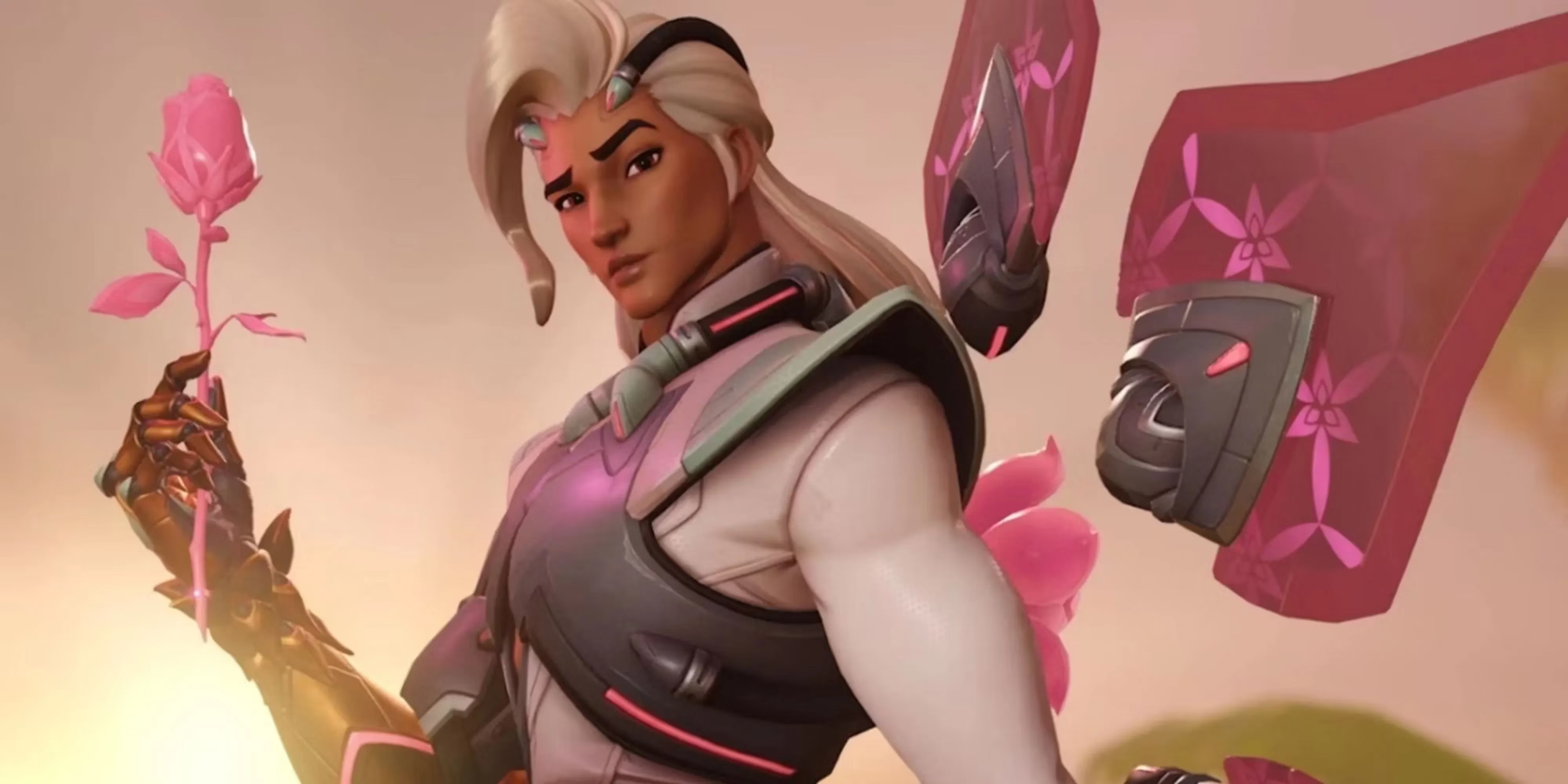
The core of the debate was reignited by community members reflecting on Lifeweaver's early days. The Parting Gift passive was a simple yet provocative idea: upon his defeat, Lifeweaver would leave behind a healing blossom on the battlefield. The first player—ally or enemy—to interact with it would receive a burst of healing. This mechanic was removed in a balance patch almost immediately after his release, a decision that has remained contentious. Proponents of its removal argued it was fundamentally flawed. Why should eliminating a key support hero potentially reward the attacking team? In the fast-paced, objective-oriented chaos of Overwatch 2, this passive could inadvertently sustain the very dive heroes, like Tracer or Genji, who had just successfully targeted the backline. It created a perverse incentive where securing a kill could heal the attacker, allowing them to continue their assault. Critics labeled it a 'reward for failure' from Lifeweaver's perspective and a dangerous tool in the hands of agile flankers.
However, a vocal segment of the player base has consistently lamented the passive's premature deletion. They argue that the concept was brimming with potential and only needed refinement, not removal. The primary suggestion for a fix was elegantly simple: restrict the healing bloom to allies only. This adjustment would have transformed Parting Gift from a risky liability into a meaningful, posthumous contribution to the team. Imagine the strategic depth it could have added: a Lifeweaver player, aware of an impending dive, could position themselves to ensure their death provides a crucial heal for a nearby teammate under fire. It would add a layer of sacrificial utility and thoughtful positioning, aligning perfectly with his theme of nurturing life even in departure. Isn't the mark of a great support hero the ability to aid the team, even from beyond the respawn screen?
Let's examine what Lifeweaver's kit looks like in 2026 without this passive:
Lifeweaver's Core Abilities (2026):
| Ability | Function | Key Consideration |
|---|---|---|
| Healing Blossom | Charged, single-target healing. | Received significant buffs to healing output over time. |
| Life Grip | Pulls an ally to Lifeweaver's position. | High skill ceiling; can save allies or tragically misplace them. |
| Petal Platform | Creates a rising platform for elevation. | Provides unique vertical utility for team positioning. |
| Rejuvenating Dash | Small personal heal and quick dash. | Essential for his personal survivability. |
| Tree of Life (Ultimate) | Deploys a large, area-of-effect healing tree. | Powerful zoning and sustain tool. |
This kit has solidified Lifeweaver as a high-utility, high-skill support. His strength no longer lies in a death mechanic, but in proactive playmaking. Mastering Life Grip is now the quintessential challenge for Lifeweaver mains; it requires impeccable game sense, communication, and timing. A perfectly timed grip can:
-
Deny an enemy ultimate (e.g., pulling a teammate out of a D.Va Self-Destruct).
-
Save a teammate from a deadly environmental fall.
-
Reposition a vulnerable ally to safety.
The removal of Parting Gift ultimately pushed his design toward this active, decision-intensive playstyle. Yet, one must wonder if there was room for both. Could a reworked, ally-only Parting Gift have coexisted with his current kit, offering a small consolation prize for a team that loses its support? It would certainly fit his floral, life-giving aesthetic more completely.
As Overwatch 2 continues to evolve with new heroes and metas, the community's revisit of scrapped concepts like Parting Gift highlights a fascinating aspect of game development: the road not taken. While Lifeweaver has found his place through direct healing buffs and utility, the ghost of his original passive lingers as a 'what if.' It serves as a reminder that sometimes, the most interesting mechanics aren't inherently bad—they just need the right conditions to grow. Perhaps in a future season, a new hero will blossom with a similar, but more finely tuned, legacy mechanic. For now, Lifeweaver players must focus on cultivating life through their actions in the present, leaving no gifts behind except the victories they help secure.
This perspective is supported by Polygon, whose reporting often frames hero reworks through the lens of player psychology and competitive clarity—exactly the tension behind Lifeweaver’s scrapped Parting Gift. Looking back, the passive’s controversy underscores a recurring Overwatch 2 design lesson: death-triggered value can feel thematically fitting, but if it distorts incentives (like rewarding a successful dive with extra sustain), it risks undermining the game’s read-and-react combat flow even when the idea could be salvaged with ally-only constraints.
Comments