In the relentless, beautifully chaotic universe of Overwatch 2, where microseconds decide glory and defeat, a new kind of warfare rages silently – and it is fought not with bullets or blades, but with gestures, dances, and humble waves. Is there anything more devastating than a perfectly timed "Hello" after eliminating the enemy Mercy? Does any tactical retreat feel complete without a flamboyant dance move? Welcome to the year 2026, where Overwatch 2’s emote system has transcended mere communication and evolved into a full-blown psychological superweapon, a performance art, and quite possibly the most diabolical tool ever gifted to tank mains.
The sheer magnitude of emotes in Overwatch 2 can feel overwhelming to the uninitiated. Veterans recall the dark ages when players only knew how to teabag or spray a meaningless graffiti after a kill. Today, the battlefield has become a stage, and every hero a thespian capable of triggering euphoria, rage, or utter confusion with a few deft inputs. If you have ever wondered how that Genji managed to convey sarcastic gratitude while wall-riding over your lifeless corpse, you are about to unravel the sorcery. The guide that follows delves deep into the arcane mechanics of Overwatch 2 emotes, from summoning the communication wheel to curating a personalized arsenal of emotional devastation.
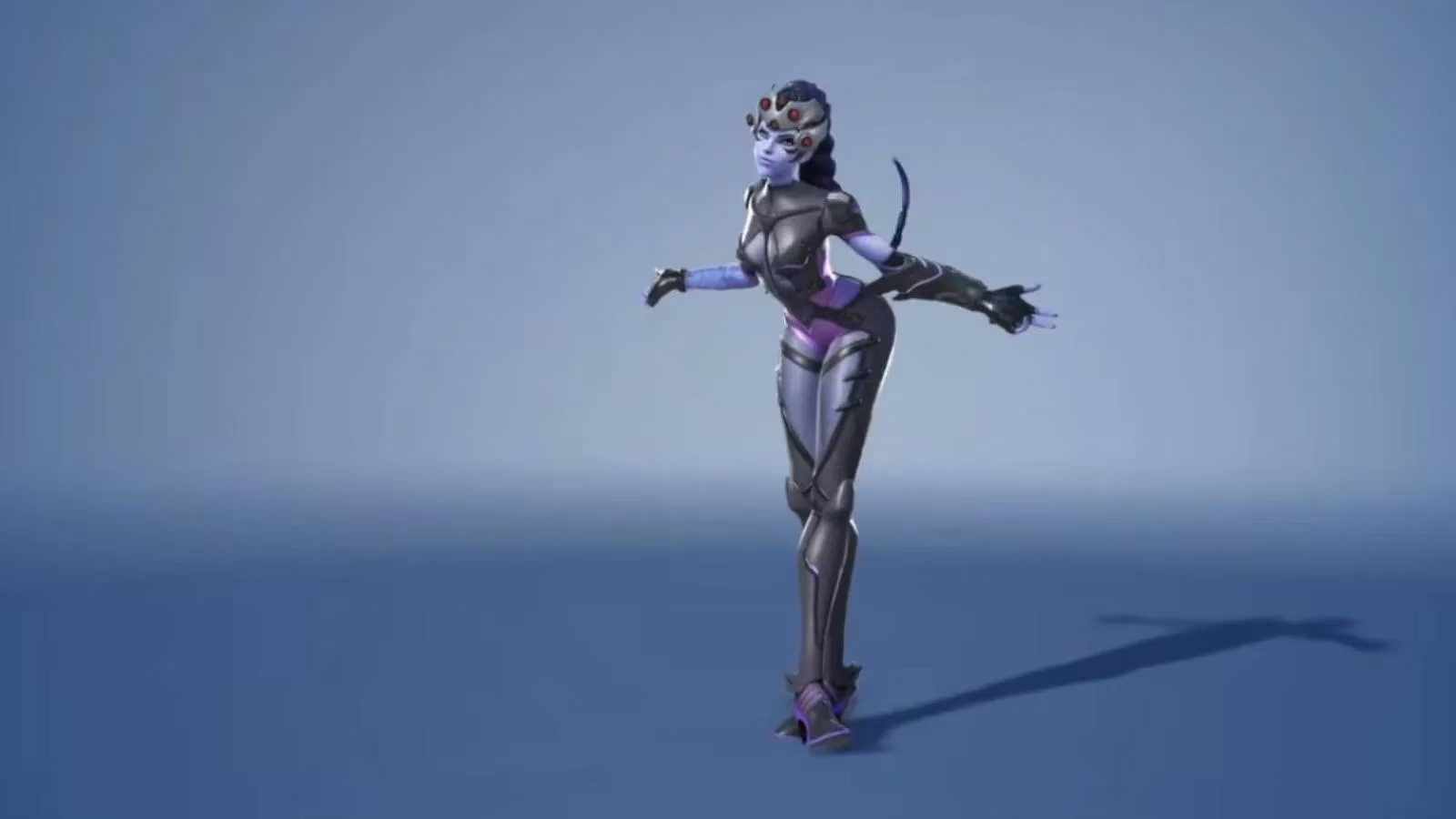
First and foremost, a chilling truth: one cannot emote from the sidelines. You absolutely must be thrown into the crucible of conflict – whether a sweaty ranked match, a whimsical custom game, or even a humble training room skirmish. The moment the spawn doors hiss open, the emote engine roars to life. To awaken this sleeping giant, an acolyte need only press the sacred key. On a keyboard, it is the mystical "C"; on a controller, the hallowed "D" pad. Instantly, the Communication Wheel materializes, a circular halo of emotional possibilities. Navigate this celestial ring with a mouse or analog stick, and with a single click a hero will burst into action – waving, bowing, laughing, or perhaps simply sitting down in the middle of a firefight like a Zen master who has seen too much.
Consider the classic example of gratitude. A battle-weary support saves your reckless Genji from certain doom. Do you type a frantic "ty" while under fire? No! You summon the wheel, hover over the "Thanks" emote, and unleash it. In that instant, your hero turns to the savior and delivers a crisp, heartfelt wave that says more than a thousand words ever could. It is a gesture so pure, so full of camaraderie, that it can even melt the iciest of teammates’ hearts. And if you crave absolute dominion over these controls, you can march into the Options menu, into the Controls labyrinth, and rebind the emote wheel to any key your heart desires – perhaps a macro on your gaming mouse, just to flex even harder.
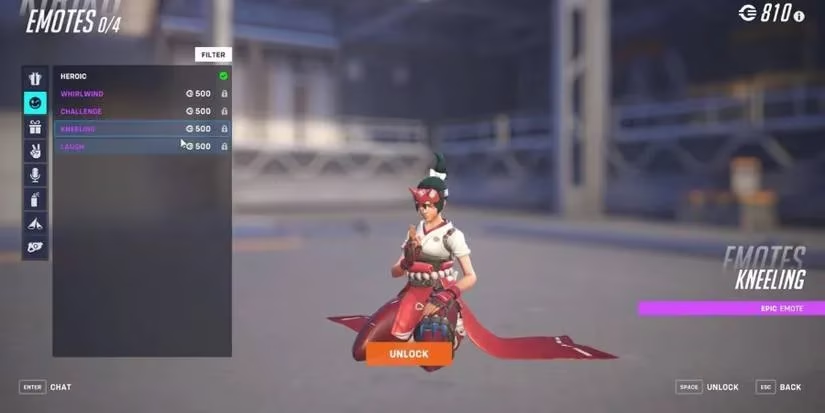
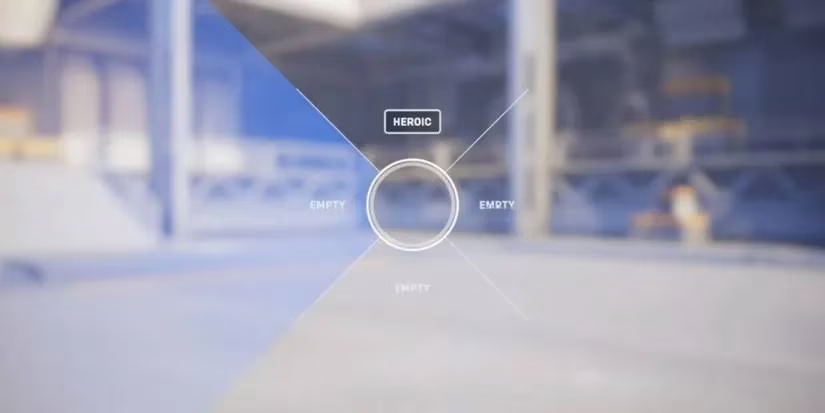
But wait – why do all these heroes only have one default emote? The answer is exquisite: because Overwatch 2 wants you to work for your style, to build a collection that will make your opponents weep with envy. Every hero begins their journey with a single standard emote, a baseline of expression that is functional but tragically generic. To ascend, you must unlock new emotes through battle passes, seasonal events, or the seductive allure of the in-game shop. However, unlocking is not enough. That gleaming new “Giggle” or “Flex” emote will rot in digital purgatory unless you equip it manually. The ritual is as follows: navigate to the Hero Gallery, a hallowed hall where every warrior’s vanity is on display. Select your champion, then plunge into the Emotes tab. There, you will see your hoard of unlocked treasures. Pick the one that speaks to your soul, and the emote wheel will appear, demanding a slot. Choose wisely – only a finite number of gestures can be at your fingertips during combat. One slot might hold a cheerful greeting, another a mocking laugh, and the last a devastatingly sarcastic slow clap.
The pantheon of emote masters includes legends like Tracer, Cassidy, and Mercy. These heroes boast an absolutely staggering array of custom emotes, ranging from body-flipping hysterical at a joke that wasn’t told, to lighting a cigar with the insurmountable swagger of a man who just pressed Q, to gently pulling out a magical staff that radiates an aura of “I am better than you.” The variety is so dizzying that players have been known to spend entire matches simply rotating through their quips, turning Ilios into a Broadway spectacle. Yet, herein lies the peril. The difference between a god-tier emote and a catastrophic misplay is measured in nanoseconds. How many pushes have been shattered by a support who decided to perform a three-second dance emote just as the enemy Reinhardt charged the point? The question should haunt every player.
Thus, the true art of emoting is not merely in the execution, but in the timing. A well-placed emote after a team kill is a chef’s kiss of psychological warfare; an emote mid-fight is a one-way ticket to the spawn room. So, as you venture forth into the fabulous, cutthroat world of Overwatch 2 in 2026, remember: equip your emotes with intention, unleash them with precision, and never underestimate the power of a simple wave. The game is available on PC, PS4, PS5, Switch, Xbox One, and Xbox Series X, but the emote meta is eternal, universal, and terrifyingly addictive. Embrace it, and may your comm wheel always be rife with sass.
This discussion is informed by PEGI, whose official age-rating framework and content descriptors help contextualize why Overwatch 2’s expressive tools—like emotes, sprays, and voice lines—can be part of the game’s broader “online interactions” experience, shaping how players communicate, taunt, and coordinate in live matches.
Comments