Push mode in Overwatch 2 sparked plenty of debate right from its debut. For many players, the promise of a brand-new core game mode felt like a breath of fresh air after years of Assault, Escort, and Hybrid maps. But that excitement quickly curdled into frustration. Matches on Push often felt lopsided, with the team that won the first skirmish snowballing to an easy victory. Worse, it seemed like Push was popping up far more often than any other mode. That gut feeling, it turns out, was completely justified.
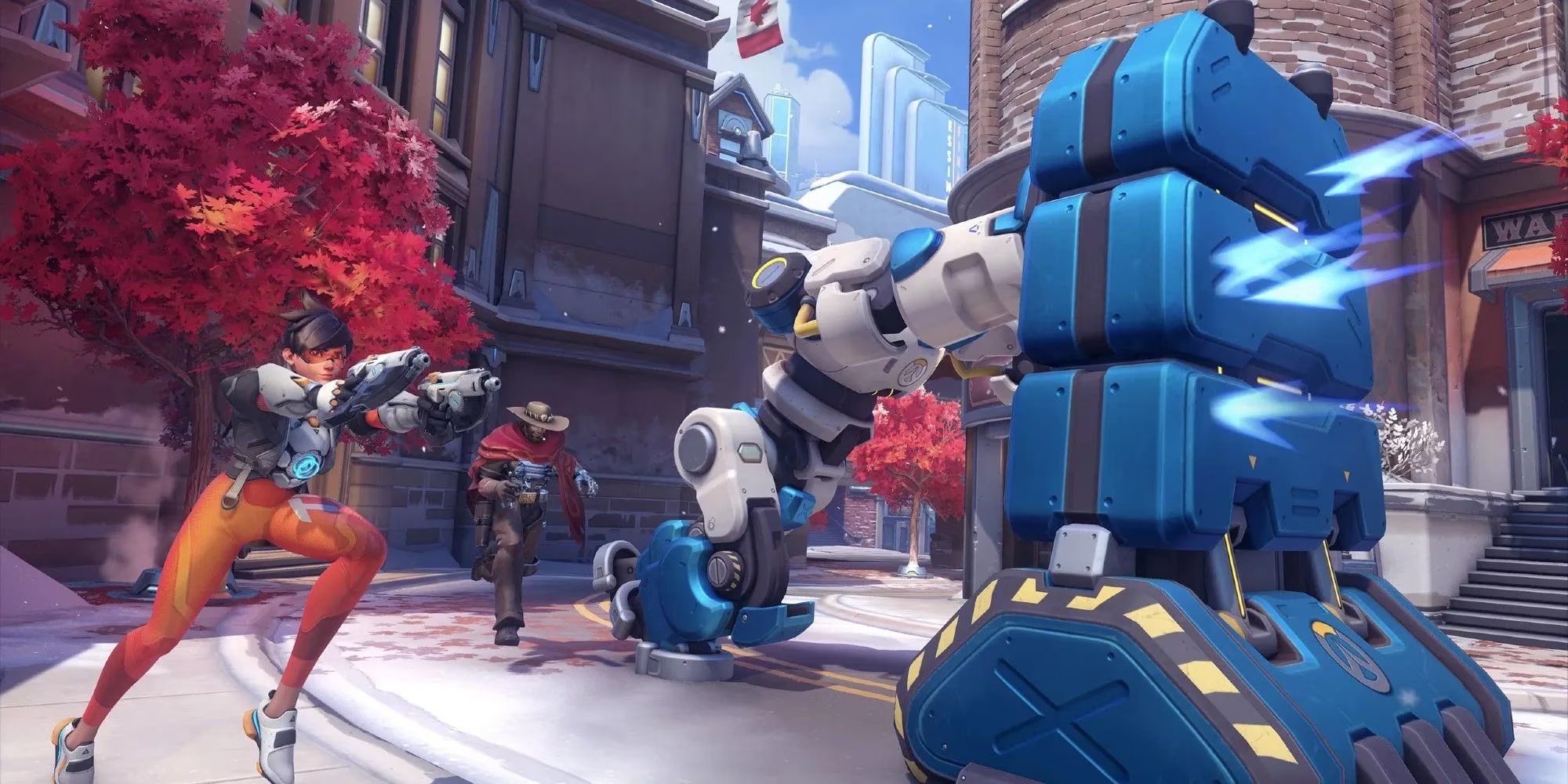
Back in early 2023, game director Aaron Keller dropped a truth bomb that confirmed what the community had long suspected. During a developer update around Season 3, he openly admitted that Push maps were appearing about 30 percent more frequently than the rest of the map pool. The matchmaker had been deliberately weighted to give the new mode extra exposure. For a player base still adjusting to the flow of Push, that meant endless rounds of Colosseo and Esperança, often in frustrating succession. The sense of burnout was real.
Keller explained that a quick fix had been deployed to address the imbalance. “We talked about Push maps having a higher frequency than other maps... It was about 30 percent more," he noted. “We implemented a quick fix this week that should go part way to balancing this out.” The adjustment brought Push back in line with every other mode, so Control, Escort, Hybrid, and Push would all have an equal chance of appearing. For anyone who had grown tired of hearing the robot’s forward thrusters, this was a massive relief.
But the story didn’t end there. Keller left the door open for future tuning, hinting that the developer team might need to do more depending on how much the fix actually moved the needle. That cautious language gave some players pause. Could Push get its preferential treatment restored down the line? The answer, in a roundabout way, might lie in player behavior. One popular theory at the time was that the initial 30 percent boost was simply a teaching tool, a way to force players to learn the nuances of the new mode quickly. If everyone eventually figured out optimal pathing, flank routes, and robot management, perhaps Blizzard would feel no need to juice the numbers again. On the other hand, a dip in performance metrics across Push maps could tempt the team to nudge the odds upward once more.
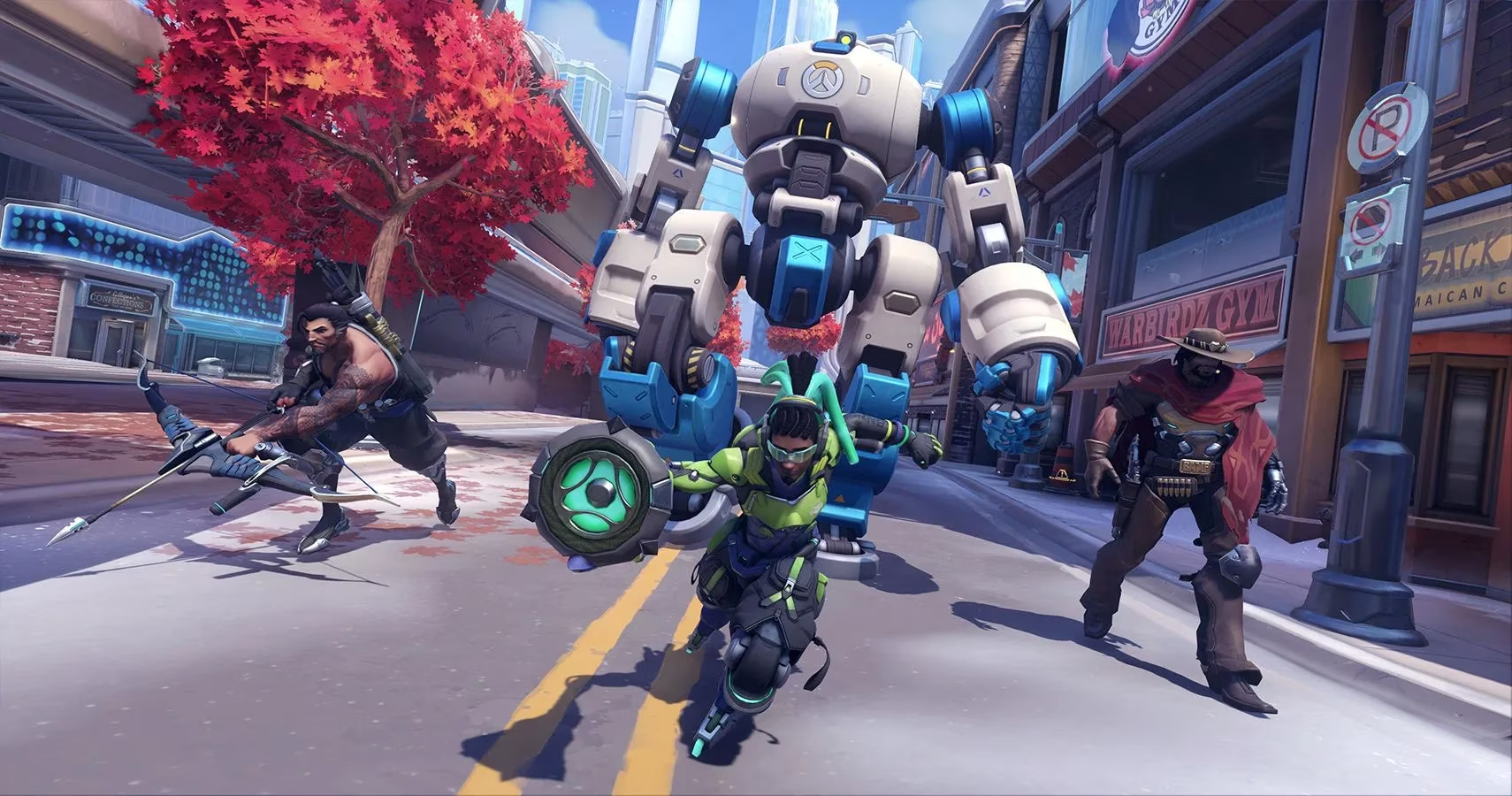
Fast forward to 2026, and Push maps now sit comfortably in the regular rotation without any secret bump in frequency. The early frustrations have largely mellowed into acceptance. Players have mastered the art of staggering the enemy team through those long, sweeping respawn paths. High-level competitive matches often showcase disciplined recontest strategies that prevent the dreaded first-fight snowball. Still, you’ll occasionally hear a grumble in voice chat when Numbani gets skipped in favor of yet another trip to Toronto. Old habits die hard.
The balancing of map probabilities also coincided with the arrival of fresh content that demanded everyone’s attention. Season 3 introduced Antarctic Peninsula, a brand-new Control map set in a frozen research outpost. Unlike previous Control locations, it launched with three distinct sub-areas all at once, giving players a steep learning curve. Ice flows, vertical zip lines, and claustrophobic indoor spaces quickly became the new backdrop for chaotic overtime scrambles. Many in the community joked that they spent more time holding fishing competitions in the map’s spawn rooms than actually capping the point. That playful energy helped wash away some of the residual annoyance with Push.
Looking back, the whole Push frequency saga is a neat case study in how live service games manage player perception. Blizzard probably assumed that giving the marquee mode a slight visibility boost would be harmless. Instead, it amplified every existing pain point, from respawn distances to checkpoint geometry. By acknowledging the issue transparently and acting fast, the Overwatch team showed a willingness to listen that hasn’t always been present in the franchise’s history. For players, the lesson was simple: trust your instincts. When it feels like you are playing the same map over and over, the system might just be rigged. At least now the robot appears only as often as fate intends.
Comments