The saga of Overwatch 2 remains one of the gaming industry's most compelling and enduring mysteries. Fast forward to 2026, and the whispers, leaks, and official silences that began years ago have only intensified, creating a landscape rich with speculation and fan theories. The journey, famously punctuated by premature announcements like the infamous PlayStation Brazil tweet from 2020, has evolved into a masterclass in controlled hype and community engagement. Blizzard Entertainment's strategy of 'going dark' has kept the sequel shrouded in an enigmatic veil, making every tidbit of information—official or otherwise—a major event for the global Overwatch community. The core questions from half a decade ago still resonate: When will it arrive, and what form will it ultimately take?
The Ghost of Leaks Past: PlayStation Brazil and the 2020 Premonition
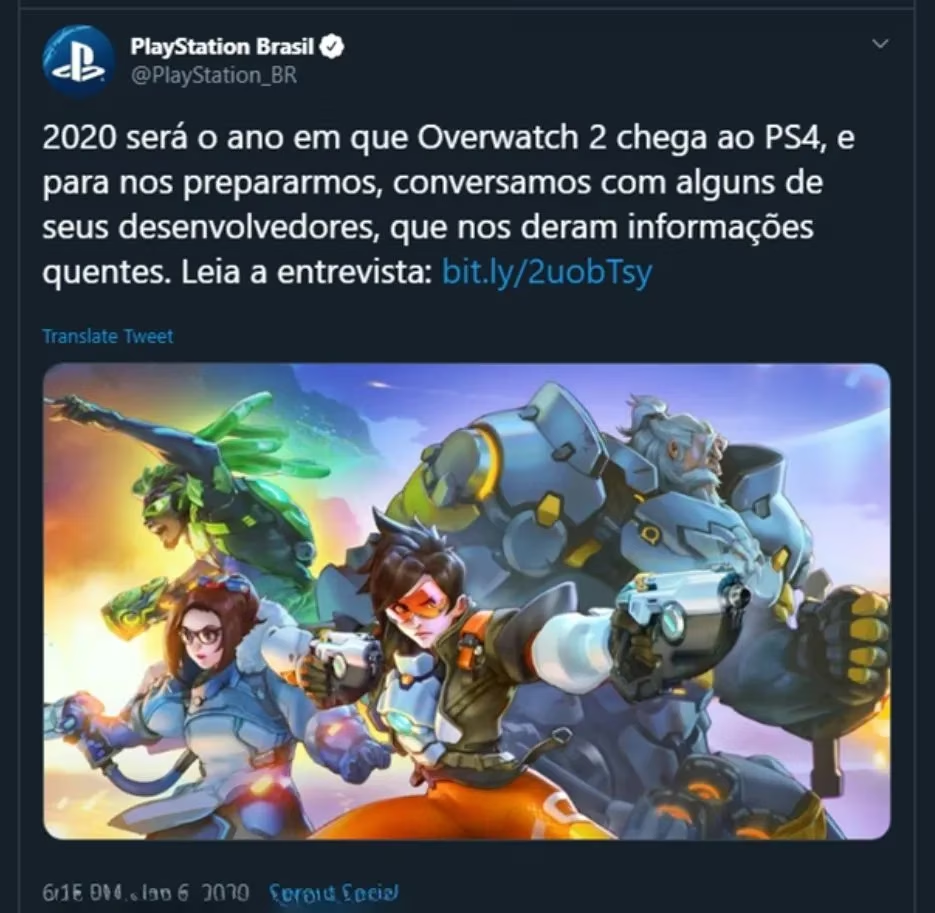
The story often circles back to a now-legendary slip-up. In early 2020, PlayStation Brazil's Twitter account posted a bombshell, stating that "2020 will be the year Overwatch 2 comes to PS4." The tweet was swiftly deleted, but not before being captured by the internet's ever-vigilant eye. This incident set the tone for the years to come. At the time, Blizzard and lead developer Jeff Kaplan maintained a firm 'no comment' stance, emphasizing that the focus was on crafting a great game rather than hitting a specific date. This leak, whether an honest mistake or a premature reveal, became a foundational piece of Overwatch 2 lore, illustrating the intense pressure and anticipation surrounding the title. It was a classic case of the cat being let out of the bag, only for the bag to be sealed shut again—tighter than ever.
Blizzard's "Going Dark" Strategy: Genius or Frustration?
Following the game's reveal at BlizzCon 2019, Blizzard made a conscious decision to limit information. This 'going dark' approach, as they termed it, was a double-edged sword. On one hand, it prevented the hype from burning out too early and allowed the developers to work without constant public scrutiny—a real 'under the radar' development cycle. On the other hand, it led to years of radio silence, testing the patience of even the most dedicated fans. By 2026, this strategy has been analyzed to death. Some see it as a necessary evil to avoid the pitfalls of overpromising, while others view it as a missed opportunity to build sustained excitement. The community has been left reading tea leaves, analyzing every job listing, trademark filing, and cryptic social media post from developers for clues.
Sequel vs. Expansion: The Enduring Debate
One of the most heated discussions in the fandom revolves around the very nature of Overwatch 2. Early criticisms posited that it seemed more like a major expansion—a glorified DLC—than a true sequel. Jeff Kaplan directly addressed these concerns at the initial reveal, asserting it was "clearly a sequel." The key differentiator has always been the promised deep dive into PvE (Player vs. Environment) narrative missions, a feature intended to complement the established PvP (Player vs. Player) multiplayer core.
-
The PvE Promise: This was the game's pièce de résistance, the feature meant to justify the "2." It promised story-driven campaigns, hero talent trees, and loot—elements more akin to a traditional action-RPG.
-
Shared Multiplayer Ecosystem: A revolutionary idea: Overwatch and Overwatch 2 PvP players would coexist in the same competitive spaces, with all heroes and maps shared. This ensured the original game's player base wouldn't be fragmented.
The scale of this undertaking—building a robust PvE experience on top of maintaining and evolving a live-service PvP game—is monumental. It's no wonder the development timeline has been, in industry parlance, a 'long haul.' This complexity directly called into question the feasibility of any early release date, like the one leaked in 2020.
The State of Play in 2026: What We Know Now
As of 2026, the landscape has shifted, but the core mystery persists. While official details are still guarded, the industry grapevine suggests significant evolution from the 2019 vision.
| Aspect | 2019/2020 Speculation | 2026 Industry Chatter |
|---|---|---|
| Release Window | "2020" (per leak) / Unknown | Subject to frequent recalibration; 'When it's ready' remains the mantra. |
| Core Focus | PvE Story Missions + Shared PvP | PvE scope may be reimagined; PvP continues as a live service with seasonal narratives. |
| Development Philosophy | "Going dark" | More iterative, transparent testing phases (e.g., limited betas) expected before full launch. |
| Platforms | PS4, Xbox One, PC, etc. | Next-gen native focus (PS5, Xbox Series X |
The Verdict: Patience is a Virtue
Looking back, the PlayStation Brazil leak feels like a relic from a different era—a time when the gaming world thought it might get a quick sequel. The subsequent years have taught everyone a lesson in modern AAA development: these things take time, a lot of time. The phrase "it'll be ready when it's ready" has never been more apt. Blizzard's silence, while frustrating, can be interpreted as a commitment to quality over chasing a fiscal quarter. The community, though often vocal in its desire for news, largely understands that a rushed game is forever bad, while a delayed game can eventually be good. The ball is in Blizzard's court, and the world is waiting for them to make their move. Only time will tell if the wait will have been worth it. 🤞🎮
Comments