When Overwatch 2 first stormed onto the scene, it did not simply replace its predecessor—it closed the original's servers like a stage manager yanking the curtain after a very long, very chaotic first act. The sequel's launch week became a fascinating case study in how to make a free-to-play shift feel like a tiny onboarding obstacle course. One leaked screenshot from the game's menu quickly turned into a digital watercooler moment: players booting up Overwatch 2 for the first time would find only one mode available, Open Queue. Everything else sat behind a padlock, including the beloved Role Queue.
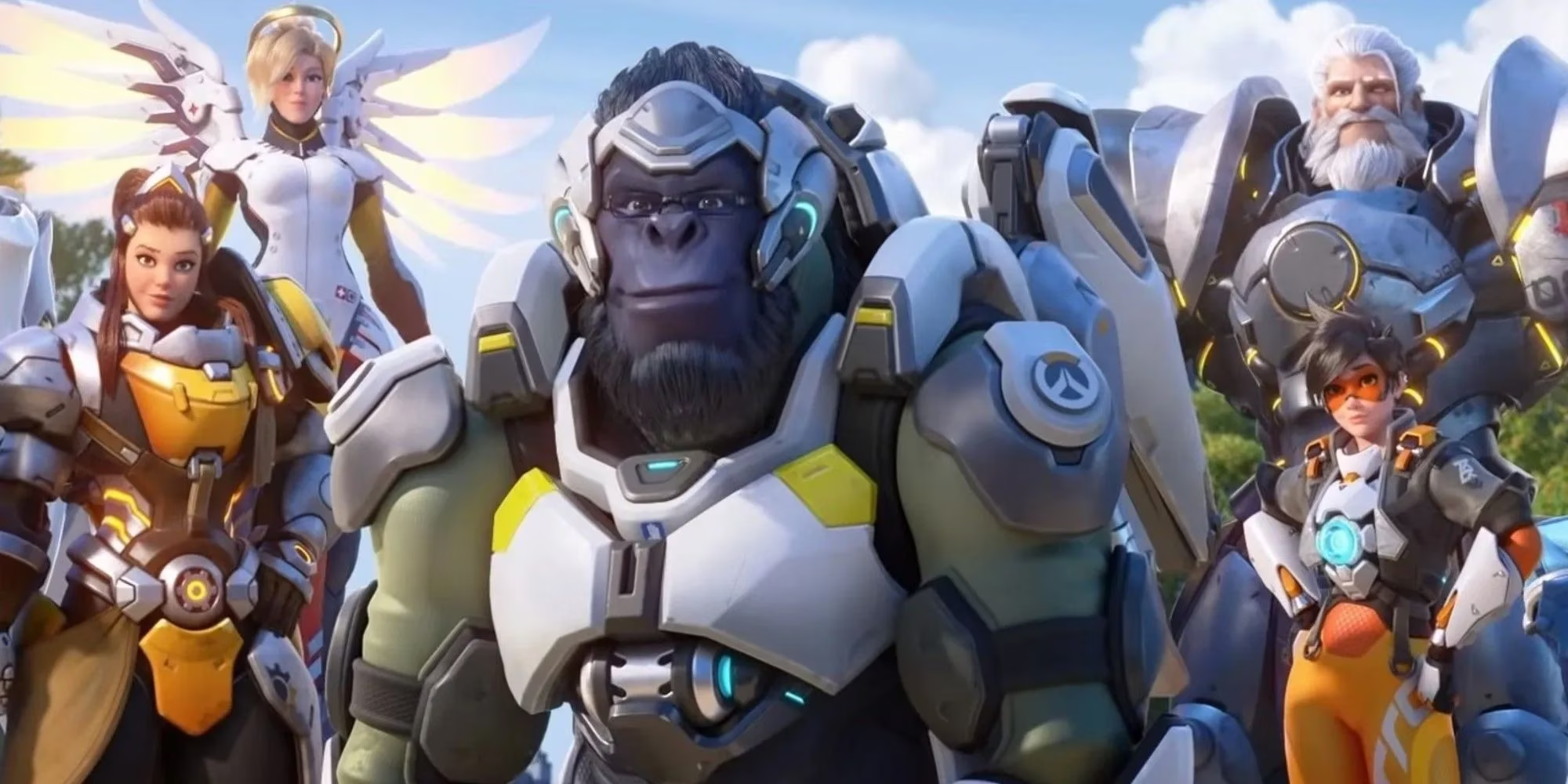
Open Queue was, at its heart, a pickup basketball game where everyone wanted to be the point guard. No one was forced to pick a tank, support, or damage role, which meant teams could theoretically field five damage heroes and call it a strategy. That was fine for chaos enthusiasts, but for anyone craving structure, the locked Role Queue felt like asking a chess grandmaster to prove themselves in five games of Hungry Hungry Hippos before unlocking the rook. The requirement itself was not enormous—five Open Queue matches—but the symbolism was loud. Blizzard had effectively told its most balanced-minded players to wade through a swamp of DPS-only compositions before earning the right to a sensible team.
🎮 The Five-Match Rite of Passage
The leaked menu revealed that three other modes awaited beyond the initial screen. Role Queue, plus other ranked and competitive options, would unlock only after a player completed a set number of Open Queue matches. For ranked modes, a gentle warm-up period made sense. Nobody wanted a brand-new free-to-play account hopping straight into competitive and treating the objective like a scenic overlook. But Role Queue was not a ranked mode. It was simply the mode that ensured even numbers of roles, theoretically producing a more balanced and rounded match.
The decision arrived like a raincloud over a picnic of casual players. For five matches, they had to endure the wild west of team composition. Some found it mildly amusing, others treated it like a tax on wanting a functioning team. If enough players complained, Blizzard might have scrapped the gate, but by the time any reversal could happen, the peeved players would already have completed their five Open Queue matches and moved on with a lingering grumble.
🔒 Hero Unlocks: The Grind Behind the Curtain
The Role Queue lock was only one piece of the launch-day puzzle. Because Overwatch 2 went free-to-play, the entire progression system had been rebuilt like a house made of battle-pass-shaped bricks. New heroes were no longer handed over with a smile. Kiriko, the fox-spirit support hero, was locked behind the battle pass. Without spending money, players had to reach tier 55 to unlock her. That grind felt like trying to fill a swimming pool with a teaspoon labeled “free-to-play”—possible, yes, but requiring a level of patience usually reserved for people who enjoy watching paint dry in four different seasonal colors.
Older heroes were not spared either. Players who had not played the original Overwatch would need to grind for some of the legacy roster. A new account could not simply pick Reinhardt, Mercy, or Genji and charge into battle. The game asked for a certain number of matches before those familiar faces were unlocked. This turned the early experience into a strange museum tour where some exhibits were visible but locked behind velvet ropes.
| Launch Unlock | Requirement | Player Vibe |
|---|---|---|
| Role Queue | 5 Open Queue matches | “Why though?” |
| Kiriko (no battle pass) | Reach tier 55 | “That is a lot of payloads.” |
| Legacy heroes (new players) | Grind matches or challenges | “Where is Reinhardt?” |
🕵️ The Wider Launch Week Noise
Beyond the mode and hero locks, the launch was surrounded by other noise. Activision Blizzard's alleged toxic work culture investigations were still ongoing, casting a long shadow over the celebration. The free-to-play pivot also meant that every cosmetic, every seasonal reward, and every hero-related progression had to be reexamined through a monetization lens. The result was a launch that felt less like a sequel's grand opening and more like a franchise performing a high-wire act while juggling battle passes, old heroes, and a community eager to find something to criticize.
For all its quirks, the five-match Role Queue lock became a perfect symbol of Overwatch 2's launch philosophy: ask players to prove they want the good stuff before giving it to them. Whether that made sense or not hardly mattered. The matches were played, the tiers were climbed, and the game marched forward like a payload that never stops moving, even when half the team is off chasing a health pack.
By 2026, the details of that launch week may feel like ancient history, but they still explain a lot about how Overwatch 2 evolved. Gates, grinds, and gear were the three-headed mascot of its free-to-play era. Players learned to treat early unlocks as a minor hazing ritual—a small price for entry into a game that was, despite itself, still pretty fun to play.
Comments