In the ever-evolving landscape of competitive team-based shooters, Overwatch 2 stands at a potential crossroads regarding its core gameplay philosophy. The developers are actively exploring drastic modifications to the game's hero-swapping and counter-picking dynamics, a system that has been a hallmark of the Overwatch experience since its inception. While these ideas are still in the nascent stages of internal testing, their mere consideration signals a significant shift in how the game might approach strategic depth and match flow. The conversation, sparked by discussions between prominent community figures and the development team, revolves around introducing limitations on hero swaps or even implementing a formal hero ban system—concepts borrowed from the realm of MOBAs like League of Legends. This exploration comes as the game continues to refine its identity in 2026, seeking solutions to player frustrations while preserving the strategic essence that defines it.
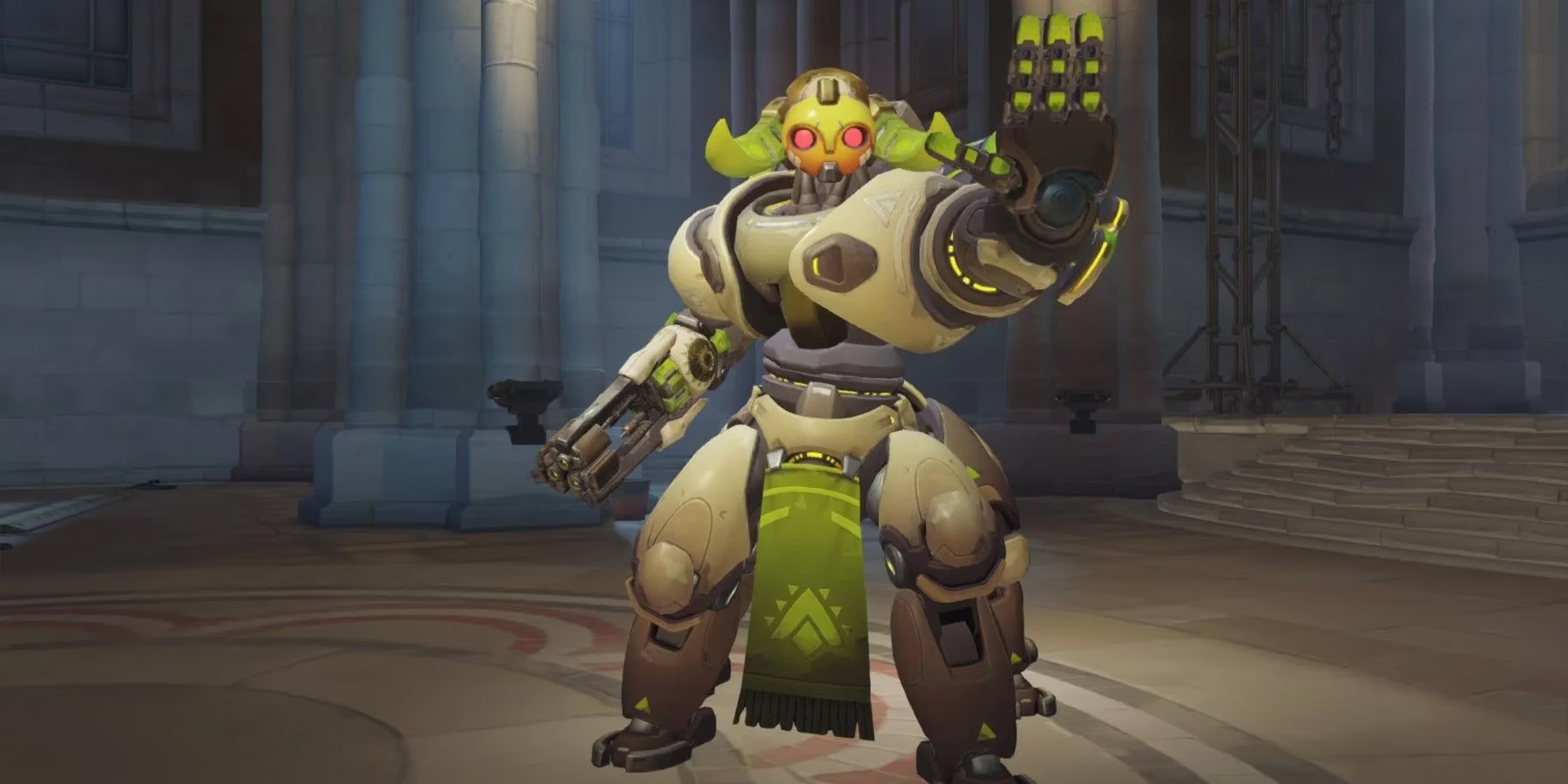
The Core of the Debate: Counter-Picking Culture
At the heart of the discussion lies the prevalent culture of counter-picking. In high-level Competitive play, matches often become a rapid-fire game of rock-paper-scissors, where players feel compelled to constantly switch heroes to directly counter the enemy team's composition. This can lead to a frenetic, sometimes frustrating, experience where mastery of a single hero can feel undermined by the necessity to swap. Lead hero designer Alec Dawson acknowledged this player sentiment during the interview, confirming the team is in the "very early stages" of investigating solutions. The goal is to add more weight and consequence to the initial hero selection and subsequent swaps, making each decision more impactful. The developers have already taken a preliminary step in this direction by reducing the retained Ultimate charge upon swapping from 25% to 15%, a clear move to add a tangible cost to frequent changes.
Proposed Systems Under Scrutiny
The development team is internally testing two primary concepts to address the counter-pick phenomenon. These are not guaranteed for implementation but represent the current direction of their brainstorming.
-
Limited Hero Swaps: This system would impose a cap on the number of times a player or an entire team could change heroes during a single match. For example, a player might be limited to 2-3 swaps per round. This would force players to think more strategically about when to use their precious swaps, rather than reacting to every enemy pick change.
-
Hero Ban System: A more radical proposal involves introducing a pre-match ban phase, similar to systems found in other competitive games. Teams could vote to remove specific heroes from play for that match. This would:
-
Increase compositional diversity by preventing the most dominant or frustrating "meta" heroes from appearing in every game.
-
Elevate the strategic layer in the pre-match phase, as teams must anticipate the enemy's strategy based on the bans.
-
Empower players by giving them direct agency over the match's parameters.
-
Community Reaction: A House Divided
The potential for such systemic changes has sparked a vigorous debate within the Overwatch 2 community. Players are sharply divided, reflecting the deep-seated nature of hero swapping in the game's identity.
👥 Pro-Change Arguments:
-
Reduces Frustration: Limits the feeling of being "hard-countered" all game, allowing for more consistent gameplay.
-
Rewards Mastery: Players can specialize in heroes without fear of being forced to swap constantly, deepening skill expression.
-
Strategic Depth: Adds a new layer of pre-match strategy with bans or resource management with limited swaps.
-
Alignment with Competitors: Brings Overwatch 2 more in line with standard practices in other major competitive titles.
⚠️ Anti-Change Concerns:
-
Core Identity Threat: Many believe the fluid, adaptive nature of hero swapping is what makes Overwatch unique. Removing it risks homogenizing the game.
-
Punishes Flexibility: Players who excel at adapting and playing multiple roles could feel their skill set is devalued.
-
Potential for Stalemates: If teams pick compositions that directly counter each other with no swaps allowed, matches could become unwinnable slogs.
-
Balance Nightmare: A ban system could expose heroes with narrow niches, making them nearly unplayable if their one or two counters are always banned.
The Developer's Stance and Future Implications
It is crucial to emphasize the tentative nature of these explorations. The developers have stressed that these ideas are in the earliest testing phases and may never see the light of day in the live game. If they do progress, they might be exclusive to the Competitive mode, leaving Quick Play and Arcade modes untouched to preserve the classic, unrestricted experience. The potential overhaul coincides with broader changes planned for Competitive Overwatch 2, suggesting 2026 could be a landmark year for the game's structural evolution. The introduction of such systems would fundamentally alter team dynamics, coaching, and the professional meta. It would force a reevaluation of what it means to build a "good" team composition, shifting from reactive counter-picking to proactive strategic drafting.
Conclusion: A Delicate Balancing Act
As Overwatch 2 marches forward in 2026, the developers face a delicate balancing act. On one side is the desire to modernize the game's systems, reduce player frustration points, and introduce fresh strategic dimensions. On the other is the imperative to preserve the dynamic, responsive, and uniquely fluid gameplay that has defined the franchise for years. The exploration of hero swap limitations and ban systems represents a bold attempt to solve a complex problem. Whether these specific ideas come to fruition or not, the conversation itself is a healthy sign of a development team willing to question fundamental assumptions in pursuit of a better, more engaging game for all players. The community awaits further news with bated breath, knowing that any decision will reshape the Overwatch 2 battlefield for years to come.
Comments