It is 2026, and the gaming world has had three full years to process the slow-motion car crash that was Overwatch 2’s single-player campaign. What began as a grand promise of a full-blown standalone adventure with hero talent trees and deep progression has quietly transformed into a drip-fed collection of story snacks—and players still can’t decide whether to laugh or cry. Looking back at the infamous 2023 developer update, the whole affair feels like a masterclass in how to over-promise and under-deliver while keeping a straight face.
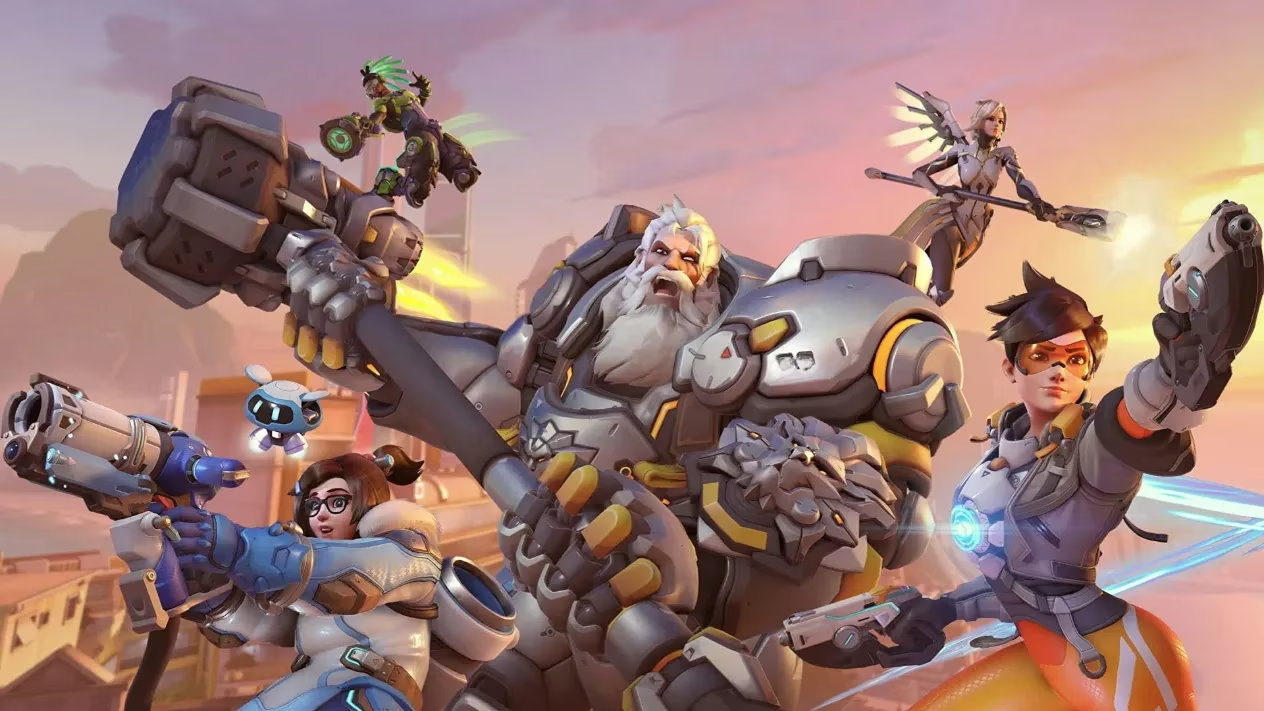
When Overwatch 2 first hit screens in October 2022, fans expecting a robust narrative experience were greeted instead with a multiplayer-only title that looked suspiciously like a glorified patch for the original game. Blizzard’s response at the time was essentially a sheepish “oops, you may have to wait a bit.” Director Aaron Keller later admitted that progress on the PvE content was “going slower” than anyone wanted, and it was only in mid-2023 that a roadmap gave the community a concrete target: Story Missions would arrive in Season 6. Oh boy, here we go again—except what was actually arriving wasn’t the campaign anyone had been dreaming of.
The original vision of a separate Overwatch 2 with its own progression systems and customizable heroes had already been quietly euthanized. In its place, players were promised smaller story missions sprinkled across seasons, telling fragmented tales that sometimes crossed into non-canon territory. It was the video game equivalent of ordering a five-course meal and receiving a series of hors d’oeuvres with no guarantee they’d ever form a complete dinner.
Season 5 dropped first, bringing the limited-time Questwatch event and Mischief & Magic, a fantasy-themed mode that felt more like a fever dream than anything connected to the actual Overwatch universe. A cinematic hinted at a new support hero arriving in Season 6, and the Summer Games made their Olympic-style return. There was even a mini-competitive 5v5 season and the fan-favorite On Fire mechanic made a comeback. But all of that felt like a carnival act designed to distract from the main event still lagging behind the curtain.
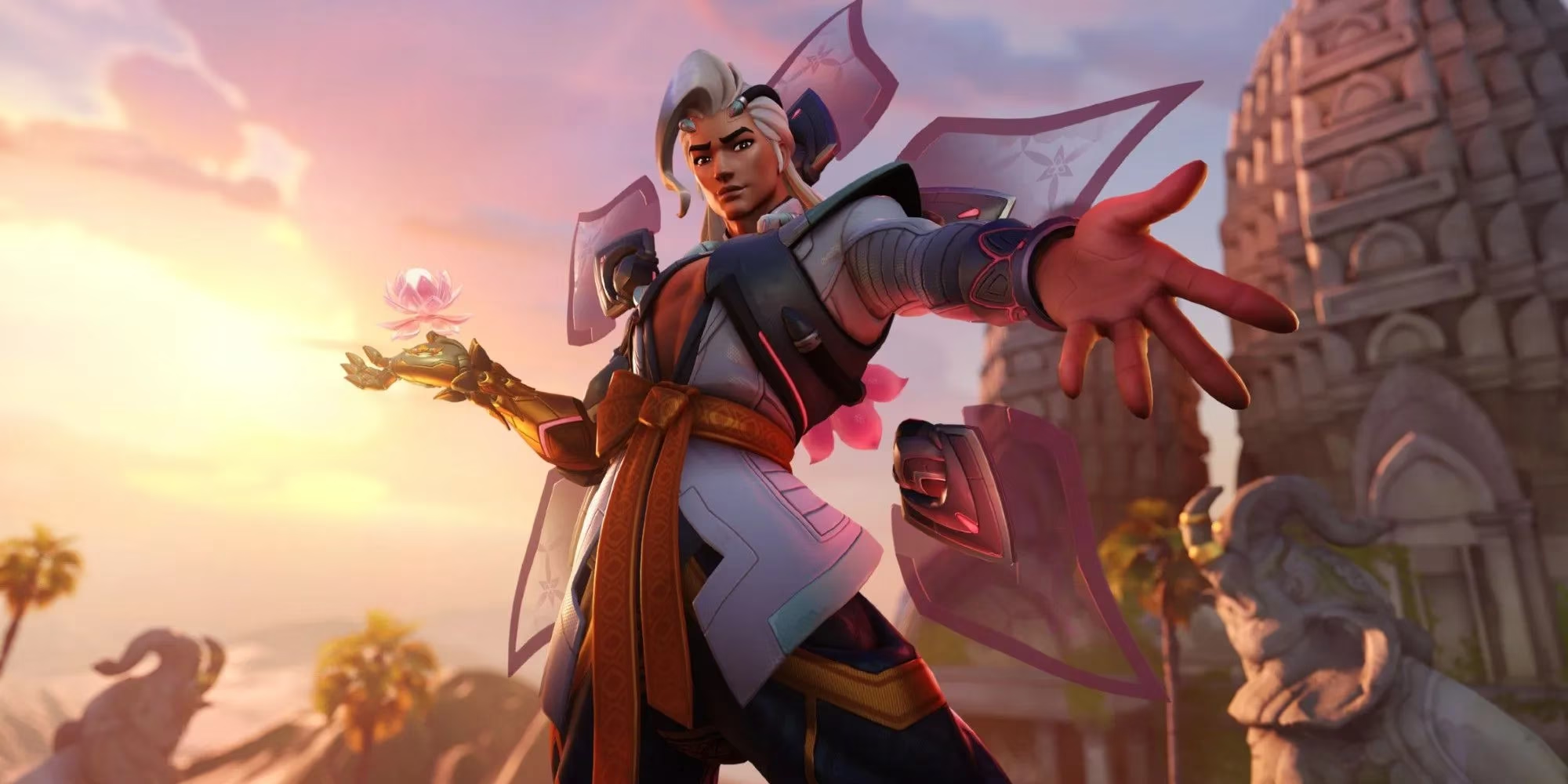
When Season 6 finally rolled around in late summer 2023, the story content did materialize—but in a stripped-back form. A new support hero, the Flashpoint mode’s return, and Hero Mastery missions were packed alongside the long-requested firing range. Player progression got an overhaul, and the anniversary event added a nostalgic glow. Yet for many, the season felt like a beautiful gift box that contained nothing but a heartfelt apology note. Streamers and fans lashed out; KarQ’s accusation that Blizzard’s business strategy was now “always prioritize the live service game” resonated across Twitter like a broken heart emoji. Saying “it was not an easy decision” didn’t exactly mend the wound.
Season 7 piled on the chaos with a new tank hero, a collaboration event, a control map, and a rework for Roadhog—whose mains had been begging for changes ever since his one-shot combo got the nerf bat. Sombra also joined the rework party, and Competitive Mystery Heroes returned to remind everyone that true chaos never dies. Story-wise, players were fed yet another cinematic and a Lore codex, but the grand campaign remained a mirage.
Fast-forward to 2026, and the pattern has become almost comically predictable. Each new season tosses a couple of story crumbs at the community, sometimes starring a fan-favorite hero, other times diving into alternate universe fluff that makes the lore purists wince. The player base has long since split into three camps: those who have learned to savor these bite-sized narratives, those who still cling to a faint hope that Blizzard will resurrect the original vision, and those who simply play Overwatch for the competitive punch and couldn’t care less about plot. You had one job, Blizzard—deliver a single-player campaign that matched the cinematic shorts—and you turned it into a seasonal subscription of mini-episodes.
Through the lens of 2026, it’s easy to see how this strategy kept the live service machine fed. Story missions are now small, self-contained morsels that focus on a single hero, often with gameplay mechanics that barely nudge the meta. They are not the towering narrative feast that was promised back when Overwatch 2 was first teased, but they are undeniably still being served. The tragedy—or comedy, depending on your level of cynicism—is that without the initial overblown hype, many of these missions might have been celebrated as delightful little additions. Instead, they’ll forever be remembered as the remnants of a campaign that was never truly cooked.
Looking ahead, Blizzard seems content to keep the story engine chugging along in this low-octane fashion. Hero Mastery missions, lore codexes, and seasonal cinematics will probably continue to drip-feed the narrative until the last server goes dark. For the players who were there in October 2022, clutching their deluxe edition receipts, the whole journey remains a lesson in managed expectations. And if nothing else, it has provided the gaming community with an endless supply of sarcastic remarks—which, in the Overwatch universe, might just be the most cohesive story arc of all.
Comments