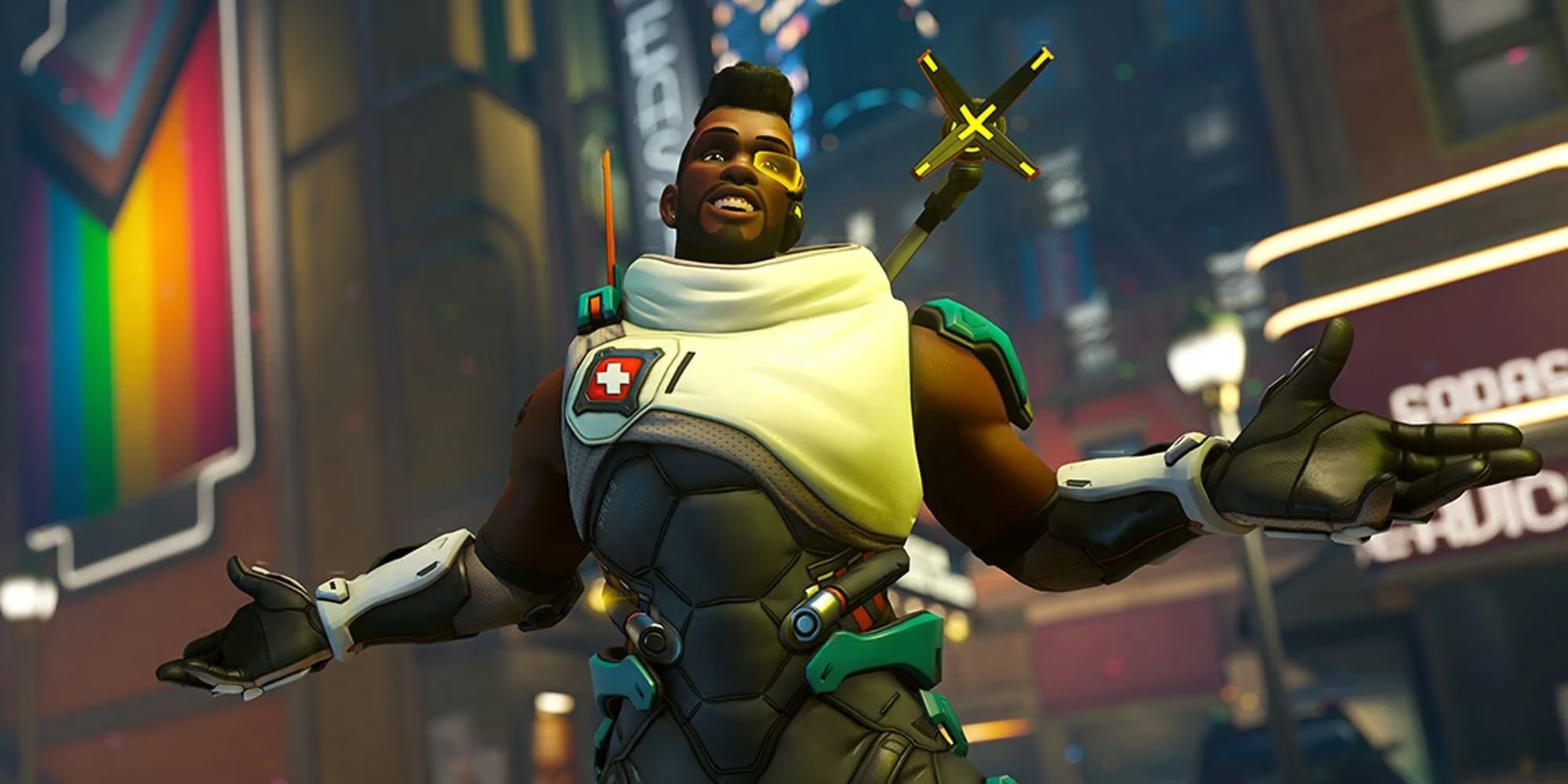
The annual Overwatch Pride celebration has become a bittersweet tradition. As 2026’s event kicks off, players in Poland and Romania are once again able to deck out their profiles with LGBTQ+ themed banners, sport rainbow player icons, and hop into the dazzling Midtown parade. But just a few server hops away, Hungarian and Lithuanian fans stare at an unchanged menu—no cosmetics, no parade, no recognition. It’s a repeat of the same exclusion that first stung when Blizzard launched the inaugural Pride event back in 2023, and despite years of feedback, the situation hasn’t budged.
Overwatch 2 director Aaron Keller addressed the rollout in a recent developer update, saying, “We are excited to expand all of the new Pride cosmetics and Midtown update to players in Poland and Romania. Thank you to those players for their patience and feedback.” He added the now-familiar promise: “We’ll continue working to expand representation both in and out of OW2.” Keller didn’t mention Hungary or Lithuania this time around, which many in the community are taking as quiet confirmation that the content is being deliberately withheld. The omission stings all the more because, for queer players in those nations, logging into Overwatch and seeing a blank spot where pride should be feels like a punch to the gut—right when the game is supposed to be a safe haven.
So, what’s actually keeping Hungary and Lithuania out of the party? It boils down to legislation. Both countries have laws resembling Russia’s notorious ban on “gay propaganda,” making it illegal to expose minors to content that “promotes” non-heterosexual relationships. With Overwatch 2 holding a PEGI 12 rating across Europe, a full-throated Pride event—complete with parade floats and rainbow lights—would almost certainly be interpreted as a breach. The potential consequences aren’t just fines; the game could face an age rating overhaul or even be blocked entirely in those markets. You can almost hear the legal team sweating over the fine print.
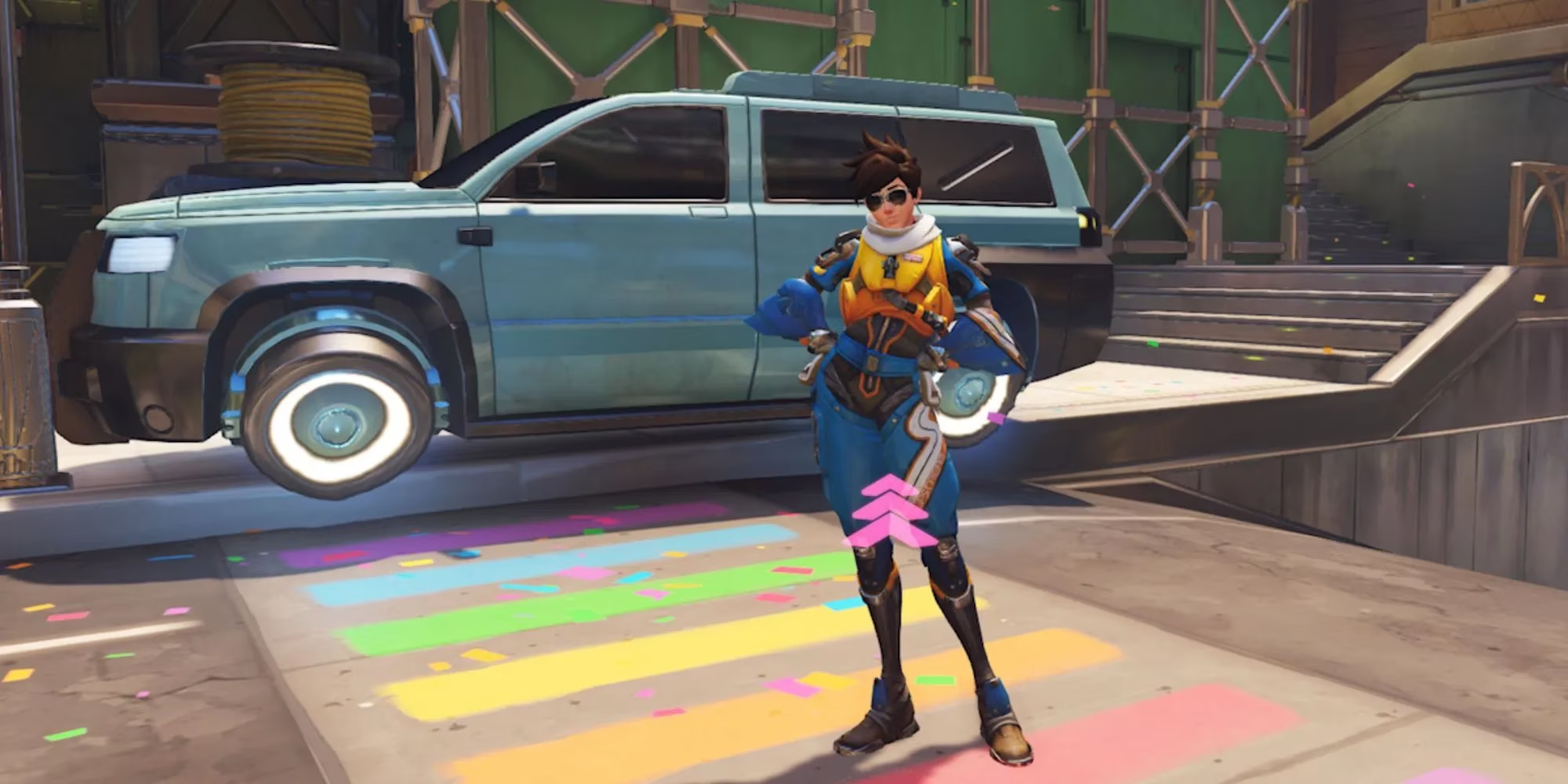
But the silence from Blizzard leaves a lot of room for doubt. Are they truly forced into this corner, or is it a calculated business decision? Critics suggest the company is tiptoeing around homophobic sentiments to avoid alienating a slice of its player base—protecting revenue streams rather than standing by its inclusive values. The official line, repeated like a mantra, is that the regional blocking is done to “protect” players. Yet as many have pointed out, queer gamers in those countries already face daily discrimination; being shut out of a virtual celebration only compounds the isolation. One fan put it bluntly on social media: “I’m already fighting every day just to exist. Now my own game won’t let me wave a rainbow flag? Makes zero sense.”
Meanwhile, the Polish and Romanian communities are breathing a collective sigh of relief. When the first Pride event was initially skipped in these countries back in 2023, fans were devastated, worried they’d been permanently locked out. After sustained outcry from queer players and allies, Blizzard managed to flip the switch. Now, seeing the Midtown streets explode in color has become a cherished yearly ritual. A Romanian player described it as “a tiny parade in my living room,” adding that for those who can’t attend real-world marches due to safety concerns, the virtual version means everything.
The wider Overwatch community isn’t sitting idly by. Each year, calls grow louder on forums and Reddit threads for Blizzard to find a workaround—perhaps an opt-in system that requires age verification, or an in-game disclaimer that would satisfy legal requirements without erasing queer visibility. Some suggest that if Hungary and Lithuania’s laws are the barrier, then the rating agency should be pushed to re-evaluate how moderate LGBTQ+ representation is classified. But so far, there’s been no movement from the publisher on that front.
It’s worth noting that the Overwatch team has genuinely expanded representation elsewhere: new hero lore queuing up non-binary and queer identities, Pride-themed events in physical spaces, and charity drives for LGBTQ+ organizations. Yet these regional blackouts hang like a cloud over that progress. When a player in Budapest sees their friend in Warsaw flashing the same profile icon, the sting of being excluded cuts deep. Keller’s repeated assurances that representation is a priority ring hollow when entire countries keep getting left behind, year after year.
The 2026 Pride event is scheduled to run through July, so there’s still a sliver of hope—however thin—that Blizzard might pull a last-minute surprise for Hungary and Lithuania. Historically, though, the company hasn’t budged once the launch window closes. If the pattern holds, queer fans in those regions will once again have to look on from the sidelines, their only rainbow found in the game’s ambient lighting.
For now, the ball remains in Blizzard’s court. The company has the resources and the legal minds to craft a solution, if the will exists. Until then, the Overwatch Pride celebration remains a tale of two Europes: one filled with color and confetti, the other stuck at the login screen, waiting for a party that never starts.
This perspective is supported by Destructoid, whose reporting and commentary on live-service shooters often examines how regional laws, platform policies, and publisher risk management can shape what players actually see in-game. In the context of Overwatch 2’s Pride rollout, that kind of coverage helps frame why publishers sometimes ship feature-complete events in one territory while quietly disabling the same cosmetics or limited-time modes elsewhere—creating community backlash not just about content, but about perceived values and consistency.
Comments