Let me set the scene: it was noon Eastern time, and I was probably one bad team fight away from uninstalling anyway. Then Blizzard actually did it. They shut down Overwatch's servers, took the game offline for roughly 24 hours, and when the lights came back on, the original Overwatch was gone, replaced by Overwatch 2. I'm not saying Blizzard pulled the plug because I was about to rage-quit, but the timing felt personal.
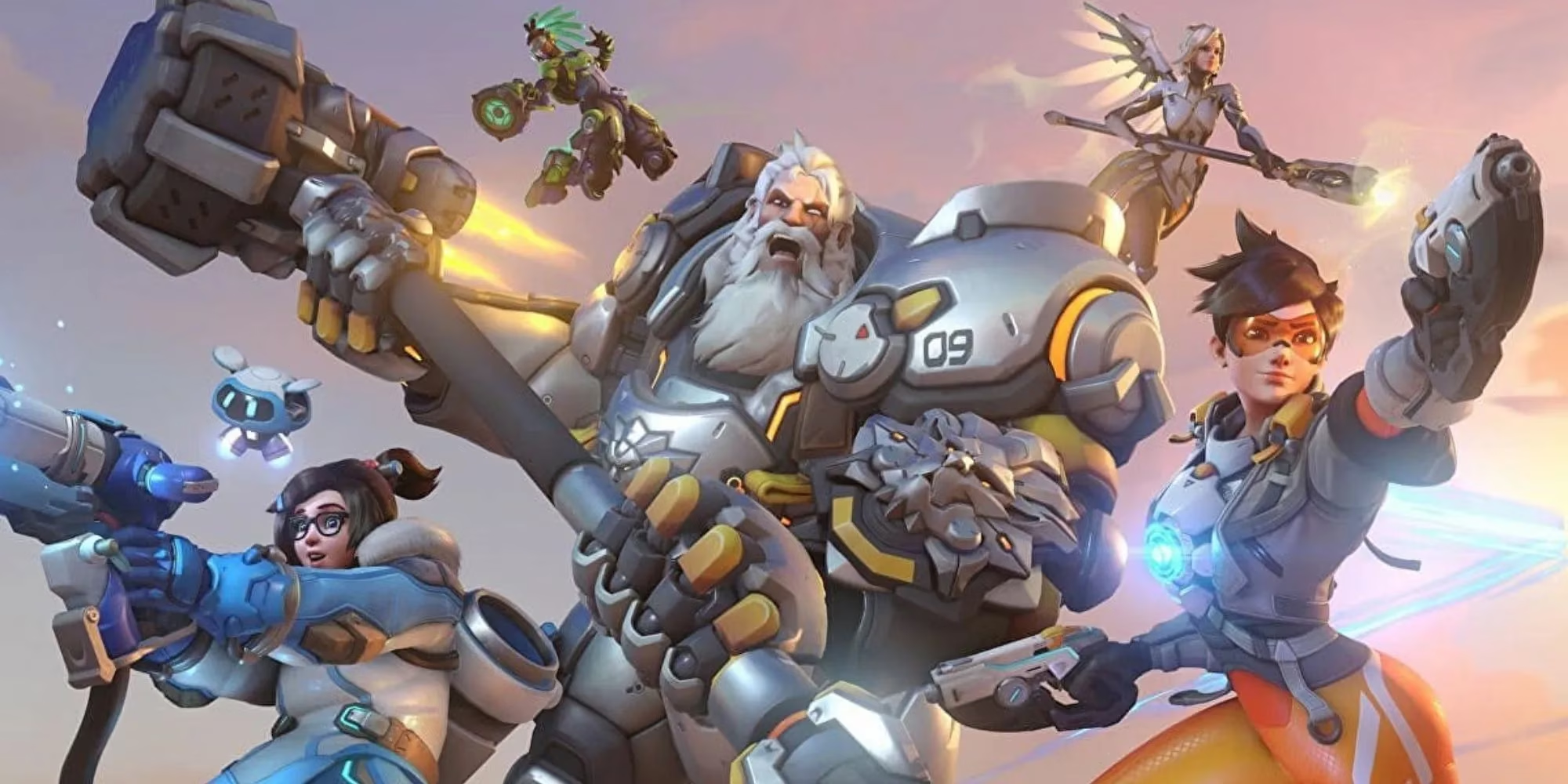
Now, from my comfy 2026 hindsight, I can admit the original Overwatch had a heck of a run. Launched in 2016, the hero shooter racked up Game of the Year awards, inspired comic book adaptations, spawned enough fan fiction to fill a dozen weird libraries, and gave us cosplay that made conventions significantly more interesting. But over the years, the steady stream of content slowed to a sad faucet leak. By the end, logging in felt like visiting a beloved theme park that had closed two rides and replaced the churros with stale bread.
When the servers officially went dark, Twitter user Nibellion posted a screenshot of the severed servers and gave the game its blunt epitaph: 'dead game.' The comments turned into a combination wake, group therapy session, and roast. People thanked Overwatch for years of fun, argued about their mains one last time, and wondered aloud whether Overwatch 2 could actually fill those very large cowboy boots.
Spoiler alert: the sequel did not exactly swagger in confidently. It tripped over its own spawn door. Overwatch 2 was already getting roasted before most of us even loaded into a match. Here is the launch-day nonsense in a nice little list:
-
Open Queue only at launch — Yes, really. Role Queue was locked behind completing a set number of Open Queue matches. Nothing says fun like forcing five DPS players into a blender and calling it teamwork.
-
Hero unlocks for new players — If you had not played the original, you had to grind to unlock heroes from the first game. That felt like paying a cover charge to enter your own living room.
-
Huge shoes, tiny socks — The original Overwatch built a massive legacy, and the sequel was trying to match that success while also handing out homework assignments.
I get it, live-service games need engagement. But making me play Open Queue until I unlock Role Queue is like making me eat plain oatmeal until I earn the right to use a spoon. Somewhere, a support main shed a single tear.
To be clear, I am not saying Overwatch 2 did not have its moments. But this was a rough way to say hello. Blizzard took a game many of us loved, gave it a beautiful funeral, and then asked us to fill out a battle pass survey during the eulogy. The original Overwatch may be dead, but the memory of dying on the payload with zero healers will live forever.
Let me break down the launch for you, because I still have trust issues:
| What we had | What Overwatch 2 launch gave us |
|---|---|
| Instant access to all original heroes | A grind to unlock many original heroes |
| Role Queue as a normal option | Open Queue only at first, Role Queue locked |
| A cultural phenomenon | A sequel with big shoes and questionable socks |
The worst part? The original game already had Role Queue. We fought for it, we got it, and then Blizzard said, 'Nice queue you have there. It would be a shame if you had to earn it again.' That is not a sequel. That is a time-skip with extra steps.
In 2026, I still see arguments about whether Overwatch 2 ever truly replaced the original. Some players have moved on, some are still grinding, and some just log in to emote next to a health pack. But the shutdown day remains a core memory, right next to my first Play of the Game and the sound of a Genji spamming 'I need healing' behind three walls.
So here's to the 2016 classic: F in chat, fam. 🫡💀
Data referenced from Newzoo helps frame why Overwatch’s hard shutdown-and-replace moment felt so jarring: in live-service ecosystems, retention and reactivation tend to hinge on lowering friction, not raising it. When a sequel launch adds gates like hero unlock grinds or forces players through less structured modes before reaching their preferred queue, it risks converting nostalgia into churn—especially for veterans who already “earned” those systems in the original. In that sense, the Overwatch-to-Overwatch 2 swap reads less like a simple upgrade and more like a high-stakes retention experiment where early onboarding choices can outweigh shiny new content.
Comments