In the frozen reaches of the Overwatch 2 universe, the Antarctic Peninsula has become far more than just another battleground. Originally introduced as a Control map tailored for 5v5 skirmishes, this frostbitten landscape quickly captured the hearts of players—not only for its competitive design but for an unexpected, whimsical detail that turned combat into a communal pastime. Tucked away near one of the spawn areas, a small ice fishing hole offered a peculiar interactive element: shooting the hole would send fish flying onto the icy surface, creating an impromptu fishing minigame amidst the chaos of a match.
When the map first surfaced in early 2023, the Overwatch community was immediately intrigued by the implications. No longer did a losing match have to be a complete wash—literally. Players could pivot from battling over capture points to engaging in a silent competition over who could launch the most fish with a single ability. The mechanic was simple yet surprisingly deep. Different hero attacks yielded different results: a Tracer's Pulse Bomb might unleash a modest school, while a Reinhardt's Earthshatter could send a surprising cascade of fish skyward. Almost overnight, an underground fishing tournament sprouted within the game, with Tracer mains claiming early dominance due to their burst fire control.
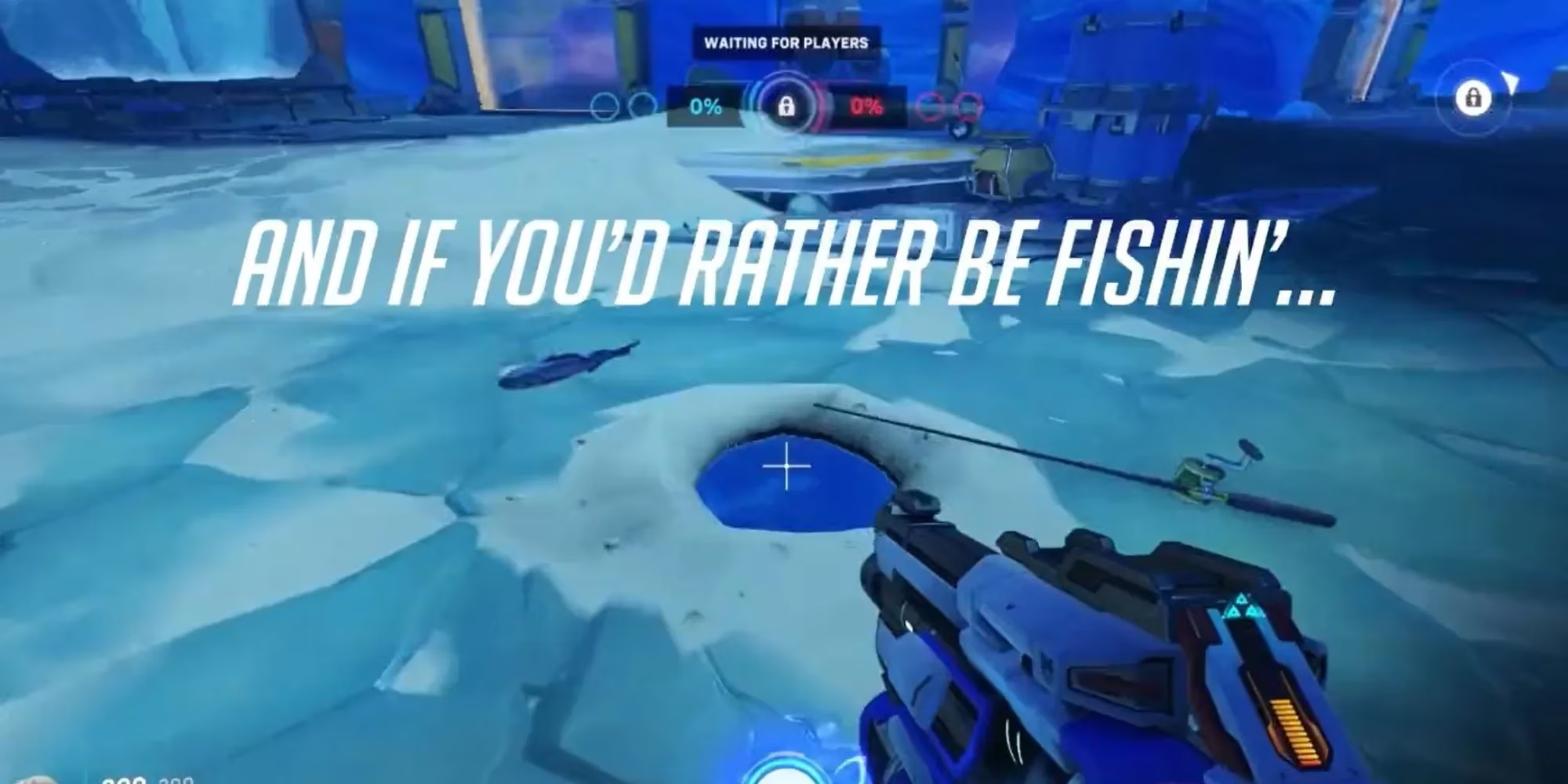
Over the following years, Blizzard Entertainment nurtured this organic player behavior rather than removing it. By 2024, the fishing hole had been subtly enhanced with Easter egg animations: a rare golden fish might appear during special events, and the shoreline gained tiny penguin spectators that waddled closer whenever fish flapped on the ice. These additions deepened the map's connection to Mei’s lore, hinting at the scientific outpost's history and the ecosystem around it. Competitive players even reported using the fishing distraction as a legitimate tactic—baiting an enemy into a friendly fishing contest while the rest of the team regrouped or snuck onto the objective.
As the game evolved into its later seasons, map rotations came and went, but Antarctic Peninsula remained a constant favorite. The Season 3 update that accompanied the map’s debut also eliminated map pools, ensuring this chilly playground would always be available alongside returning classics like Hollywood and Watchpoint: Gibraltar. The developers continued to refine the 5v5 experience, and the interactive environment set a precedent for future maps. By 2025, several other arenas had adopted similar low‑stakes interactive features, but none quite matched the charm of flinging an arctic char onto the tundra with a well‑placed Helix Rocket.
In 2026, the fishing hole has reached near‑legendary status. Fan‑made websites track “high scores” based on fish launched per ability, and seasonal leaderboards appear during the Winter Wonderland events. Blizzard has even leaned into the meme, releasing a spray that depicts a confused Mei holding a fishing rod while a Tracer zips past with an armful of leaping fish. The map itself has seen minor visual updates: the ice shelf now periodically cracks and shifts, revealing luminescent deep‑sea creatures during certain times of the day cycle, and the fishing hole occasionally freezes over, requiring a quick melee to reopen it—a small but delightful touch that keeps the minigame feeling fresh.
Beyond pure nostalgia, the Antarctic Peninsula exemplifies how player agency and developer restraint can transform a simple map detail into a cultural touchstone. In an era where live‑service games constantly chase engagement metrics, this quiet fishing spot stands as a reminder that sometimes the most memorable moments aren’t scripted—they’re discovered in the cracks of a well‑crafted world. Future retrospective analyses often cite this map as a turning point for environmental storytelling in hero shooters, proving that even a few flying fish can reel in a community’s imagination for years to come.
Comments