I still remember the day when Jeff Kaplan, the beloved 'papa' of Overwatch, sat down with Kotaku back in 2019 and dropped a bombshell that would shape the game's future for years to come. The announcement of Overwatch 2 had just sent shockwaves through our community, and everyone was asking the same questions: Would this split our player base? Would we need to buy a whole new game just to stay relevant? As a dedicated player since the early days, I felt that familiar mix of excitement and anxiety that comes with any major gaming franchise evolution. But what Jeff revealed that day turned out to be one of the most player-friendly decisions in modern gaming history.
Fast forward to 2026, and looking back at that pivotal moment feels like examining gaming history. Kaplan confirmed something revolutionary—the original Overwatch and its sequel would eventually merge into a single game client. Can you imagine? In an industry where sequels often mean abandoning the previous installment, Blizzard was promising something different. They were essentially saying, "Your investment in Overwatch matters, and we won't force you to buy a new game just to play with your friends." This wasn't just corporate messaging; it was a commitment to the community that had made Overwatch a cultural phenomenon.
What did this mean for us players? Well, let me break it down based on what we've experienced over the past seven years:
The Core Promise That Changed Everything:
-
Shared Multiplayer Ecosystem: Whether you bought Overwatch 2 or stuck with the original, you'd play together in the same matches
-
Equal Competitive Ground: No pay-to-win advantages for sequel purchasers
-
Content Parity: New heroes and maps would be available to all multiplayer participants
-
Balanced Updates: Character buffs, nerfs, and weapon adjustments would apply universally
But here's the question that everyone was asking back then: If the multiplayer was going to be the same, what exactly made Overwatch 2 worth purchasing? The answer, as Kaplan hinted, lay in the PvE campaign. While we all enjoyed the competitive 6v6 matches (and later 5v5), there was always that curiosity about the world behind the battles. Who were these heroes when they weren't shooting at each other? What stories unfolded between missions? Overwatch 2 promised to answer those questions through narrative-driven cooperative gameplay.
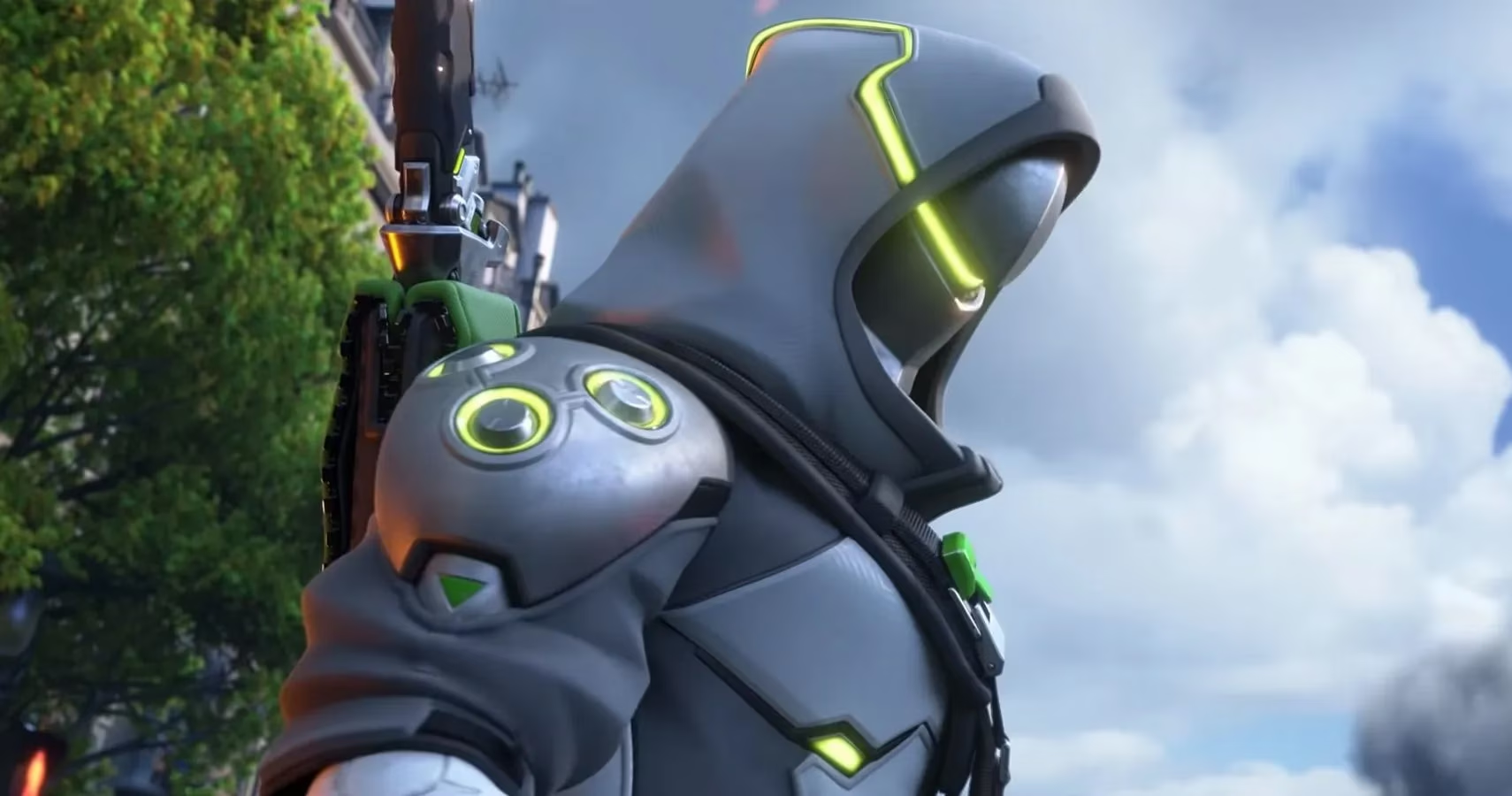
The merging of clients wasn't without its complexities though. I remember the community debates raging about what might not make it into the base Overwatch experience. The character remodels were one sticking point—those gorgeous visual updates that made heroes like Genji look even more spectacular. Would they be exclusive to Overwatch 2? And what about potential exclusive game modes or features? Kaplan was careful not to promise everything would be identical, leaving room for the sequel to have its unique value proposition.
The Timeline of Implementation (As We Experienced It):
| Year | Development Milestone | Community Impact |
|---|---|---|
| 2019 | Initial merger announcement | Mixed reactions, cautious optimism |
| 2022 | Overwatch 2 early access launch | Technical challenges, but unified queues working |
| 2023 | Full client integration complete | Seamless transition for most players |
| 2024-2026 | Continued content updates for all | Stronger, more unified community |
Now, in 2026, I can confidently say that Blizzard's vision has largely come to fruition. The transition wasn't perfect—remember those server issues during the initial merge?—but the core principle held strong. I still play with friends who never purchased Overwatch 2, and they have access to:
-
Every new hero released since the merger
-
All competitive and quick play maps
-
Seasonal events and game modes
-
Balance changes that keep the gameplay fresh
What's particularly interesting is how this approach influenced other games in the industry. We've seen several live service games adopt similar philosophies, recognizing that fracturing player bases often leads to community decline. Blizzard's gamble—prioritizing player unity over immediate sequel sales—paid off in long-term engagement.
The PvE content, while initially exclusive to Overwatch 2 purchasers, eventually found its way into various forms accessible to all players through:
🎮 Hero Missions (rotating weekly challenges)
🎮 Archives Events (expanded narrative experiences)
🎮 Co-op Story Moments (integrated into seasonal events)
Reflecting on Kaplan's original reasoning, his fear of splitting the fanbase was well-founded. Look at what happened to other franchise sequels that created separate player pools—the matchmaking suffered, communities fragmented, and the magic of a shared experience diminished. By keeping us together, Blizzard preserved what made Overwatch special: its people.
Key Lessons From The Overwatch Merger:
✅ Player investment should be respected
✅ Competitive integrity matters more than exclusive content
✅ Evolving games can include rather than exclude
✅ Transparent communication builds trust
✅ Long-term community health drives success
As I queue for my next match today, I'm playing with a mix of veterans from the 2016 launch, players who joined during the Overwatch 2 era, and everything in between. We're not divided by who bought what; we're united by our love for the game. The heroes have evolved, the maps have expanded, and the meta has shifted countless times, but that core experience of teamwork and competition remains.
So was Overwatch 2 truly a sequel or an expansion? In hindsight, it was something more innovative—a bridge. A bridge between the game's past and future, between different groups of players, and between business models that often conflict. It proved that games could evolve without leaving anyone behind, that sequels could enhance rather than replace, and that sometimes, the most revolutionary idea is simply keeping people together.
When I think back to that 2019 interview, I realize Kaplan wasn't just announcing a technical decision about game clients. He was making a promise about the kind of community Overwatch would continue to be. And seven years later, that promise has created something more valuable than any exclusive content: a living, breathing world where everyone has a place at the table, regardless of when they joined the fight for tomorrow.
Comments