It's 2026, and looking back, the seismic shift in the gaming landscape that began with Microsoft's acquisition of Activision Blizzard feels both inevitable and surreal. As a long-time player who cut my teeth on Diablo and StarCraft, the idea of Blizzard's iconic Battle.net service fading into the background was once unthinkable. Yet here we are, three years after the deal was finalized, and the once-impenetrable fortress of Blizzard's digital home feels more like a grand, echoing museum—a monument to a bygone era of exclusive launchers, slowly being absorbed into the vast, interconnected ecosystem of Xbox Game Studios. The initial tremors, like Overwatch 2's quiet arrival on Steam back in 2023, were just the beginning. Now, the future of the platform that defined my PC gaming adolescence for decades hangs in a delicate, uncertain balance.
The Rise and Reign of a Digital Kingdom
To understand why this potential sunset feels so significant, you have to remember what Battle.net was. It wasn't just a launcher; it was the kingdom's keep. Launched in 1996, a breath before Diablo unleashed its horrors, it started as a simple conduit—a digital tavern where friends could gather before venturing into the dark together. With StarCraft in 1998, it exploded, becoming the nervous system for competitive gaming. By the time World of Warcraft and Diablo 2 cemented its place, Battle.net had evolved from a tool into an institution. For us, the players, it was the only portal to these worlds. Trying to play a Blizzard game without it was like trying to breathe in a vacuum; it simply wasn't done. Its 2013 rebranding polished the interface, but the core truth remained: Blizzard lived here, and so did we.
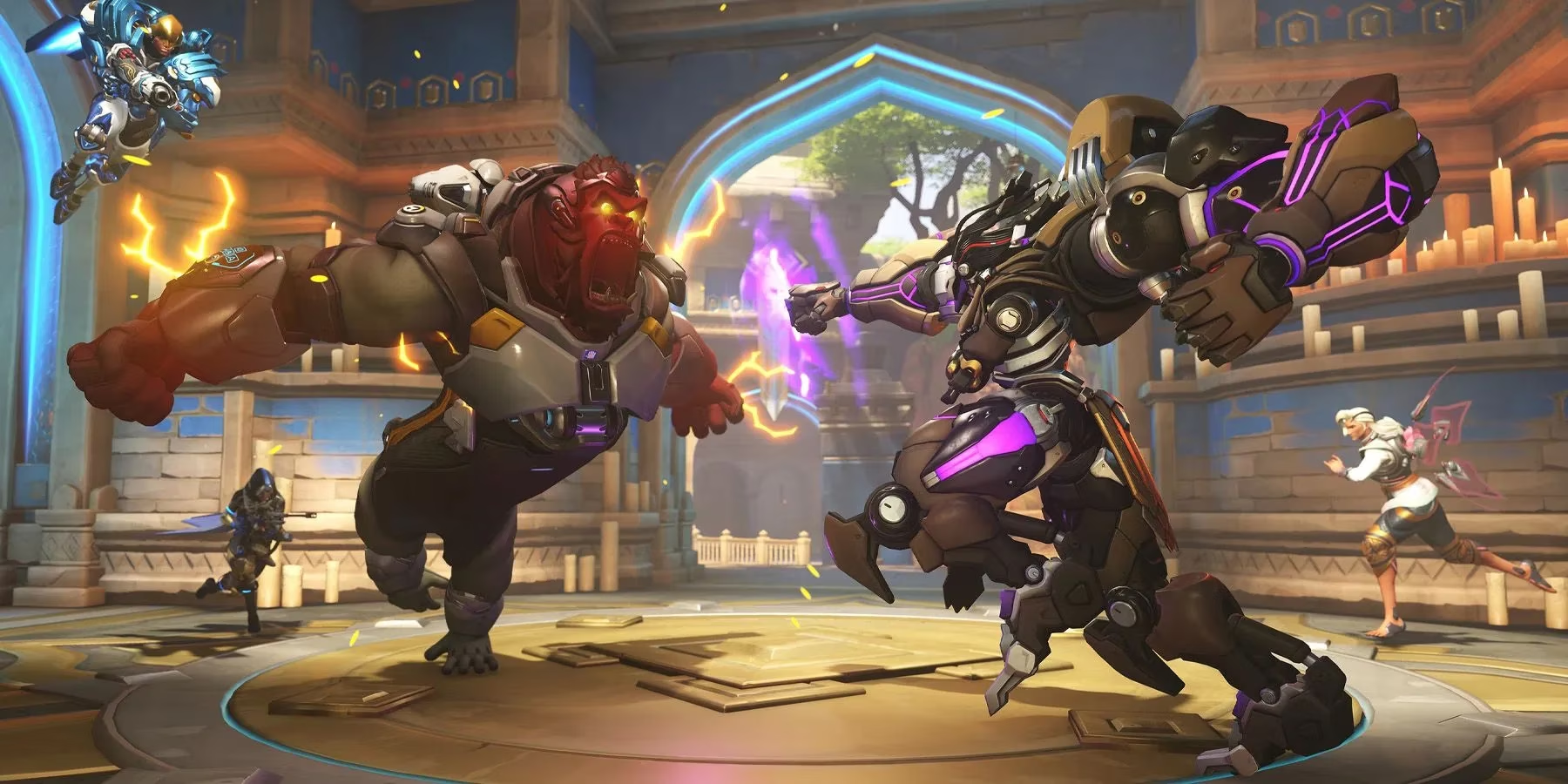
For years, this was the gateway. It felt permanent.
The Cracks in the Foundation: Steam and Shifting Strategies
The first real sign that the walls might not be eternal came not from Microsoft, but from Blizzard itself. In 2023, launching Overwatch 2 on Steam was a quiet revolution. Unlike other publishers who used Steam as a front for their own launchers, Blizzard let the game live natively on Valve's platform. You still needed an account, but the Battle.net client itself became optional—a startling departure from doctrine. It was a strategic move, of course. Steam is the continent's largest marketplace; ignoring it was leaving money and players on the table. But this move was like a master architect quietly approving a new door in the side of their impregnable castle. It worked flawlessly, proving the games could thrive outside their native habitat. This experiment paved the way for what was to come.
The New Overlord: Microsoft's Ecosystem Embrace
Then came the acquisition. With Microsoft's Xbox Game Studios now at the helm, the calculus changed completely. Microsoft already possesses a powerful, unified ecosystem:
-
Xbox App/PC Game Pass: The primary hub for its subscription service and first-party titles.
-
Steam Partnership: A mature, cooperative relationship for selling games like Halo and Sea of Thieves.
-
Cloud Integration: Deep ties with Xbox Cloud Gaming.
Maintaining a separate, parallel launcher in Battle.net suddenly seemed like an expensive redundancy. From a corporate perspective, it's like maintaining two separate, elaborate aqueducts when one upgraded system could deliver water to the entire city more efficiently. Resources spent on Battle.net's infrastructure could be funneled into game development or enhancing the Xbox ecosystem. The pressure to consolidate was immense. Why have two customer service systems, two friend lists, two update pipelines?
What Could the Future Hold?
So, what does 2026 and beyond look like for our old friend Battle.net? The path isn't one of sudden death, but of gradual transformation and integration. I see a few likely scenarios unfolding, much like different endings to an RPG questline:
| Scenario | What It Means | Likelihood |
|---|---|---|
| The Full Merger 🧬 | Battle.net's functionalities are absorbed into the Xbox App. Your Blizzard friends list becomes your Xbox friends list. Your WoW subscription is managed through Game Pass. | High - This is the most efficient path for Microsoft. |
| The Steam Surge 🚢 | More legacy titles (Diablo II: Resurrected, StarCraft Remastered) and all new releases debut day-one on Steam, with Battle.net as a secondary, dwindling option. | Very High - This is already happening incrementally. |
| The Hybrid Model 🤖 | Battle.net remains as a lightweight "authenticator" and account manager for Blizzard titles, but the storefront and social features migrate to Xbox/Steam. | Medium - A compromise that preserves the brand name but not the platform. |
| The Status Quo ⏳ | Battle.net continues unchanged, a beloved but increasingly isolated relic in Microsoft's portfolio. | Low - This contradicts the entire rationale of the acquisition. |
A Player's Personal Reflection
As someone whose teenage years were soundtracked by the ding of a Battle.net whisper and the clashing of armies in Warcraft III, this transition is bittersweet. Battle.net was more than software; it was the town square of my digital youth. Letting go of that specific, familiar plaza is hard. There's a fear that the unique culture of Blizzard communities—the specific etiquette of trade chat, the veteran recognition of a rare forum title—might get diluted in the vast oceans of Steam or the structured social networks of Xbox.
Yet, there's undeniable excitement too. The potential for true cross-platform play between Xbox and these PC titans is thrilling. Imagine a Call of Duty or Overwatch where your friends list is seamless, regardless of device. The integration could be as elegant and powerful as a well-forged alloy, combining the strengths of Xbox's infrastructure with Blizzard's game design magic. And let's be honest, having all my games in fewer launchers is a convenience I've come to crave.
The Legacy Will Endure
While the Battle.net client's future is cloudy, one thing is crystal clear: Blizzard's games are not going anywhere. World of Warcraft, Diablo, and Overwatch are cultural pillars. If anything, being under the Xbox banner might give them more stability and resources. The games themselves are the timeless cathedrals; Battle.net was just the particular road we all used to walk to get to them. That road might be getting repaved, widened, and connected to a larger highway system.
The soul of these experiences—the epic raids, the loot-driven dungeons, the precise tactical combat—is untethered from any single launcher. As we move forward, the community will adapt and migrate, as it always has. We won't lose Azeroth or Sanctuary; we might just visit them through a different, more connected gateway. The era of the exclusive Blizzard launcher is likely drawing to a close, but the next era promises these legendary worlds to an even wider audience, woven into the very fabric of modern gaming. And for that, I'm ultimately optimistic.
Comments