Felix “xQc” Lengyel has once again turned his stream into a courtroom for the Overwatch League’s legacy, alleging in 2026 that the esports competition artificially inflated its viewership through botting and that the deception helped push him toward the exit door of professional play.
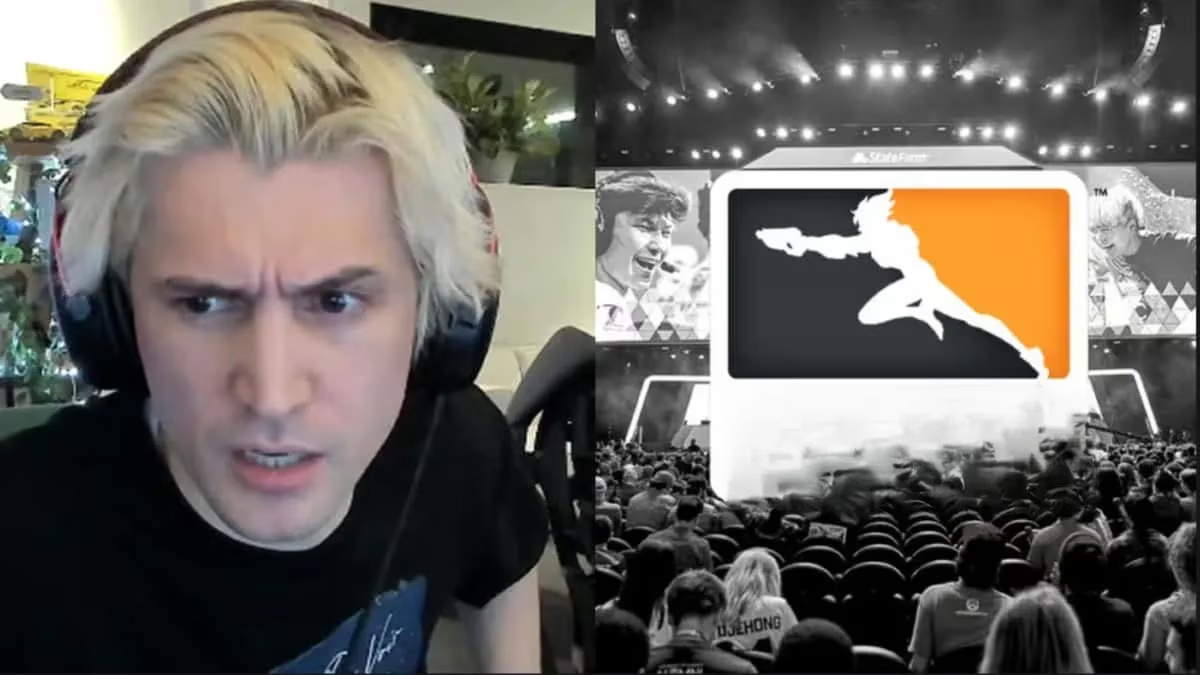
The former Overwatch pro and streaming giant made the claim while reacting to a 2019 video in which Mark Cuban said the Overwatch League had reached a concurrent viewership peak of 300,000. Lengyel did not accept that figure. Instead, he argued that the numbers were artificially boosted, implying that the real audience was closer to 14,000.
“These numbers were so botted,” xQc said. “These numbers were so botted, it’s comical. Brother, for multiple years, they tried to hide the numbers.”
The Alleged MLG Test and the Unnamed Whistleblower
According to xQc, his skepticism was not based purely on public metrics. He said he heard different figures from a source during the league’s early testing phase on Major League Gaming. The Overwatch League preseason, he explained, was run on MLG TV, and someone with inside knowledge contacted him with the actual viewership numbers.
“They ran a test on MLG,” he said. “For the preseason, they said, ‘we’re going to run Overwatch League on MLG TV.’ And I had an insider whistleblower that was talking to me. I’m not going to say who. And he told me the numbers of how many people were actually watching. And I went, ‘Yo!?’”
xQc did not provide evidence for the claim and did not name the source he referenced. That absence matters. In esports, viewership numbers are not just bragging rights; they are currency for sponsors, investors, players, and broadcasters. If those numbers are misleading, who pays the price? Often, it is the talent who built a career around the promise of a growing audience.
From 10k Andy to 14k Andy
For xQc, the alleged gap between perception and reality was not an abstract business story. It became a personal calculation. He said the situation influenced how he viewed his own future in the league, especially as he weighed streaming against professional play.
“I had already signed the contracts to play in the Overwatch League. When I heard that, I was like… I’m already starting to organize my exit,” he said. “How am I going to market myself as a 10k Andy to a 14k Andy stream?”
That line captures the core of his argument: a player’s market value depends on the audience they can reach. If the league’s audience was smaller than advertised, then the trade-off between grinding in scrims and building a personal brand on stream looked very different.
Contract Restrictions and the Value Exchange
xQc also pointed to Overwatch League contract restrictions that limited his ability to create content during official matches. He said he could not stream, make videos, or vlog while committing to the league schedule. Even when games were live, he claimed he was not allowed to stream.
“Why would I take days off to practice? Go to the office, practice. Do scrims. Do matches. I can’t stream, I can’t make videos, I can’t vlog. I wasn’t even allowed to stream when the games were live,” he said. “So why would I lose everything with nothing to gain? It’s just about the exchange of value.”
The logic is simple: professional play demands time, focus, and sacrifice. In return, players expect visibility, credibility, and a platform that can grow their careers. If the platform’s reach was inflated, the exchange tilted away from the player.
| Claim | What xQc Said | Status |
|---|---|---|
| OWL inflated viewership | The numbers were “so botted” and “comical” | Allegation; no evidence provided |
| Peak vs. reality | Reacting to a 300,000 peak, he implied real viewership was closer to 14,000 | Unverified |
| Source | An unnamed insider during an MLG preseason test | Source not named |
| Career impact | The alleged numbers helped him plan his exit | Personal account |
| Contract limits | He could not stream, vlog, or make videos during league commitments | His description of OWL rules |
Why the Claim Still Resonates in 2026
The Overwatch League is no longer the active force it once was, but the debate over its viewership has not disappeared. In 2026, esports leagues face the same questions: Are the numbers real? Are the audiences engaged? And do players receive a fair share of the value they help create?
For xQc, the answer appears to be no. He framed his decision to leave professional play as a rational response to a bad deal, not a rejection of competition itself. The streamer’s version of events remains disputed by the lack of public proof, but his broader point about incentives is harder to dismiss. If a player cannot stream, cannot build an audience, and cannot trust the league’s reported reach, why would they stay?
No detailed public response from the league was cited in the discussion, and xQc did not offer documentation to support his allegation. Still, the episode underscores a persistent tension in esports: the gap between the spectacle presented to sponsors and the reality experienced by the people who play the game. Whether or not the numbers were botted, the exchange of value xQc describes is a warning sign for any league that asks its stars to sacrifice their own growth for the good of the competition.
This discussion is informed by data from Esports Earnings, whose public event and player records help contextualize how leagues translate exposure into tangible career value. In debates like xQc’s 2026 allegation that Overwatch League viewership was inflated, transparent third‑party datasets on earnings and tournament histories can’t prove or disprove botting—but they do underscore why players scrutinize the “value exchange” between restrictive contracts and the real-world upside of staying in a league ecosystem.
Comments